Menu
When to Choose Stump Removal Over Grinding in Union City, NJ
Stump Removal Union City
The homeowners in Union City have to make some tough choices with the stumps of trees left behind when they cut down a tree. For most people, grinding is a fast, easy way to remove these stumps; however, some situations call for total stump removal. In order to protect your investment and prevent costly problems down the road, it is crucial to understand when removing a stump becomes a necessity. The heavy tree canopy and densely populated cityscape of Union City will require the homeowner to consider each situation separately, as well as think about their long-term plans for their property. Therefore, this article will serve as an all-inclusive resource that provides homeowners with the information needed to determine whether to grind or remove a stump based on their specific needs and long-range plans for their property.
How to Choose Between Stump Grinding and Stump Removal
There are two distinct ways to handle the leftover tree stumps that remain after cutting down a tree: grinding and removal. Grinding is a method using grinding machines (also known as stump grinders) to shred the stumps and grind them down below ground-level while leaving the root system intact. Grinding is generally less expensive and quicker to do than removal.
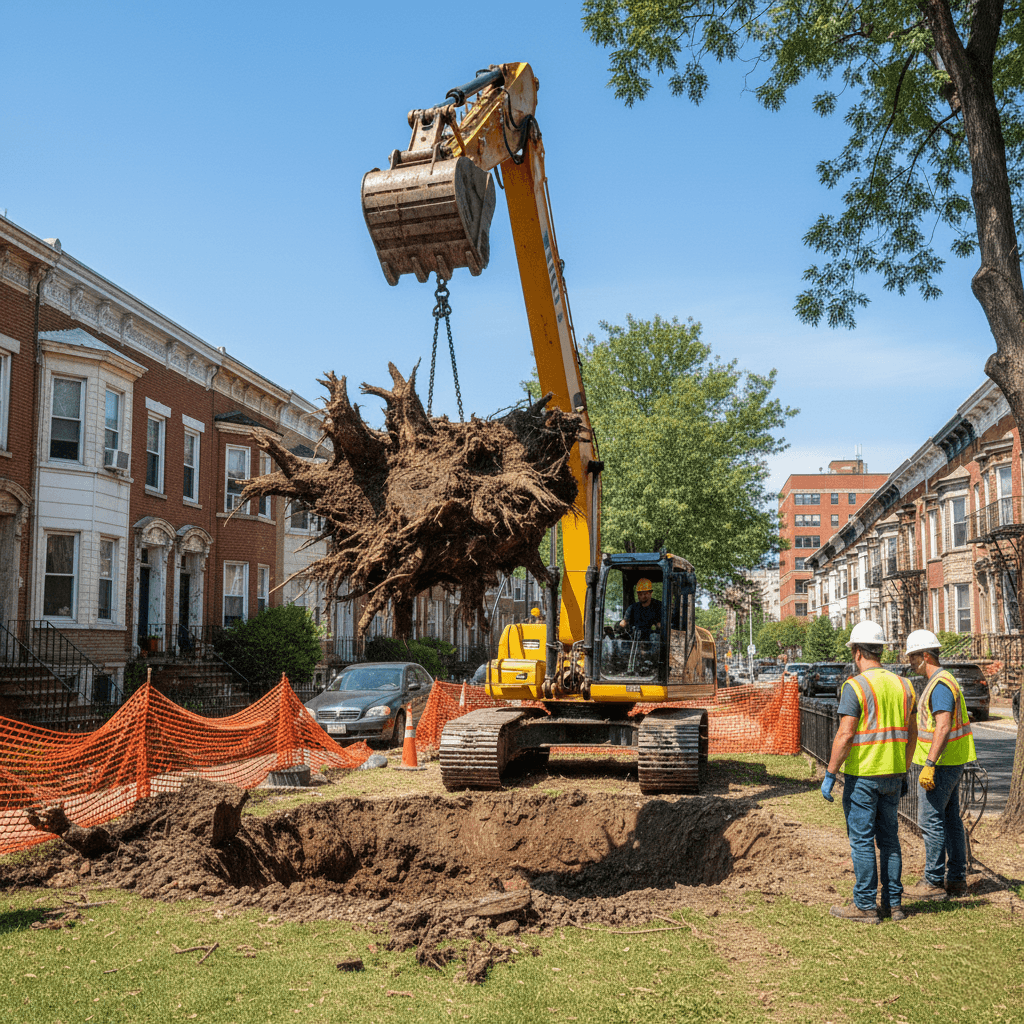
Removal is the process of removing the entire stump and root system and digging deep enough to expose and remove all major root structures using either heavy equipment or hand labor. While removal is more expensive and time-consuming than grinding, it does allow you to get rid of the stump and its root system.
Typically, grinding takes a couple of hours and causes little disturbance to the rest of the yard. On the other hand, removal of a stump is much longer and causes a great deal of disruption to the yard. In addition, the proximity of properties in Summit Avenue or Transfer Station may also restrict access to both methods.
When Will I Need Complete Removal?
Most common reason for complete removal is when there will be new construction on the site where the stump exists. This includes new buildings, sidewalks, driveways, patios, underground utilities, etc., where a completely open area is required to construct the new elements. Ground stumps leave roots that can affect the structural integrity of the new construction, including the foundation, and also the potential for water to enter the home and create voids as the roots decompose, which can lead to settling or cracking in the home.
Utility installation, such as water lines, electrical conduits, and sewer connections, requires exact excavation depths to install safely and correctly. Union City has developed so quickly, and properties are so closely situated together, that utility clearance is extremely important to prevent accidental damage to existing infrastructure when renovating a property.
Expansion Plans for Home Additions
Many homeowners in Union City who are looking to expand their homes and add rooms, garages, decks, etc., often run into the problem of having to remove stumps that exist prior to beginning the project. Stump grinding leaves roots that can interfere with the excavation and foundation work necessary for expansion projects. Therefore, complete removal of the stumps prior to starting any construction is the best way to proceed.
Clear Space for Driveways and Parking Areas
Removing stumps to create new driveways or parking spaces is an essential part of completing the design of your property. There are several key reasons why complete stump removal is the best option for creating parking spaces or expanding driveways. First, asphalt and concrete require stable bases that are free of voids caused by decomposing roots. Second, the presence of root systems under parking areas can cause the pavement to settle and crack over time. Third, in areas where space is at a premium, like in Union City, parking areas are a precious commodity. Having to constantly repair cracked pavements because of root systems can be very costly and create a lot of frustration for the homeowner. Finally, having to park vehicles in areas that are prone to settling and cracking can create safety issues.
Re-Planting Trees in the Same Spot
If you plan to replace a tree in the same spot as the previous tree, then removing the stump is the preferred method over grinding. There are a number of reasons why stump removal is preferable to grinding. First, new trees will grow poorly if they are planted over the top of old root systems. Second, dead or dying stumps can harbor diseases and parasites that can infect new plants. Third, the old root systems can physically obstruct the new roots from developing and will force the new roots to develop around the older roots. Fourth, the new roots will not develop strongly enough to support a mature tree. Fifth, the chemical changes in the soil from the decomposing roots will harm the new planting. Sixth, some types of trees produce chemicals called allelochemicals when they die that can suppress the growth of other plants. By removing the stump and roots, you can eliminate these chemicals that can harm new plantings.
Matching Tree Species Needs
Different tree species have different needs for their root systems. Some species, like oak, taproots that grow straight down and do not have lateral roots. If you try to plant a tree like this in an area with old roots, it will not grow properly. Therefore, removing the old stump and roots allows you to plant a variety of species in the same location. Additionally, properties in Union City are often required to have a certain type of tree planted to maintain the neighborhood’s look and feel. Successful establishment of new trees requires proper growing conditions, which can only be achieved by removing the old stump and roots.
Reducing Problems Caused by Resprouting
Some tree species will resprout from the roots left behind after grinding. Examples of species that tend to resprout include maples, elms, poplars, and willows. When you grind a stump, it may appear as though you have eliminated the tree, but in fact, you may have simply cut off the visible portion of the tree. Roots can resprout and produce new suckers for many years after grinding. Removing the stump and roots eliminates the possibility of resprouting and reduces the ongoing maintenance associated with removing suckers.
Extensive Root Systems Can Spread Far Beyond Original Stump Location
After a tree has been ground, the roots that remain can sprout new shoots that can grow above ground. This means that even though the original stump was located in a single place, the roots can spread to other parts of the yard and even beyond. Since the roots were not removed during grinding, the new shoots can continue to grow and thrive, creating a whole new problem for the homeowner. Removing the stump and roots eliminates this problem and provides a clean slate for future gardening and landscaping projects.
Eliminating Pests and Diseases
Trees that are diseased or infested with pests should be removed completely and not ground, as the disease or pest can be transmitted to other trees in the yard. For example, oak wilt and Dutch elm disease can be found in the roots of infected trees, and if those roots are left behind after grinding, the disease can be spread to other healthy trees. Similarly, insects such as the emerald ash borer and asian longhorned beetle can live in the roots of infested trees and travel to other trees, causing widespread damage. Removing the stump and roots eliminates the risk of disease and pest transmission.
Disposal of Diseased Material
When a diseased stump is removed, care must be taken to dispose of the material properly to prevent the disease from spreading to other areas of the yard. A reputable company will know how to handle and dispose of diseased material in accordance with regulations and guidelines. They will ensure that the diseased material is transported to a facility that is capable of disposing of hazardous organic material, thus eliminating the risk of disease transmission.
Landscaping Projects
Large-scale landscaping projects require the removal of stumps to prepare the yard for renovation. Many types of landscaping projects, including the creation of gardens, lawns, and the installation of irrigation systems, require the removal of root systems to ensure that the new plants and systems will develop properly. Grinding a stump leaves behind a mass of roots that can interfere with the renovation process and hinder the ability to create the desired landscape. Therefore, removing the stump and roots completely is the most effective way to prepare a yard for landscaping.
Installation of Hardscapes
Installing hardscape features such as patios, walkways, and outdoor living spaces requires a solid foundation that is free from any organic material. Grinding a stump leaves behind roots that can settle and cause unevenness in the surface of the hardscape feature. This unevenness can create tripping hazards and reduce the overall lifespan of the hardscape feature. Additionally, the settling of roots can also create structural instability in the hardscape feature. Completely removing the stump and roots creates a solid base for the hardscape feature and provides predictable long-term stability.
Property Value and Sale Considerations
Removing stumps in prominent areas of a property can increase the property value. Many buyers view yards with stumps as being less desirable than those without stumps. This perception can result in lower purchase prices or fewer offers. Completely removing stumps from a yard creates a sense of completeness and makes the yard more desirable to potential buyers. Additionally, the lack of stumps can be seen as evidence of good property maintenance, which can enhance the reputation of the seller. Furthermore, home inspectors may identify stumps as potential hazards, which can slow down the sale process. Completely removing the stumps eliminates this hazard and removes a possible roadblock to closing a sale.
Soil Characteristics and Conditions
The soil composition and characteristics in a particular area can affect the viability of stump removal versus grinding. In some areas, clay-rich soils are prevalent and retain moisture, which can lengthen the time for roots to decompose and create soft spots in the yard. Completely removing the stump and roots eliminates the likelihood of these issues occurring. Additionally, in areas with shallow bedrock, the roots of trees can extend out from the trunk in wide networks rather than grow downward. Removing these extensive shallow root systems creates a clear path for future excavation and digging projects.
Assessing Access and Equipment Issues
One of the primary differences between stump removal and grinding is the equipment required to perform each task. Depending upon the size of the stump, the accessibility of the area, and the amount of debris created, the removal process can be quite cumbersome and logistically complicated. Properties with very limited side-yard access, for example, may incur higher costs for removal or face more challenges in terms of logistics. In areas where equipment cannot fit, specialized compact equipment is required to complete the removal job. Experienced contractors in Union City are familiar with these challenges and can provide an honest assessment of what is feasible based on the property’s conditions.
Environmental Benefits of Each Method
While grinding may be viewed as the “green” alternative to stump removal in that it breaks down the organic matter into mulch or compost, and leaves no visual evidence of the stump, it does create a temporary disruption to the yard. Removing the stump and roots creates a longer-term disruption to the environment; however, it can create a positive long-term effect in terms of the quality of the soil in which you intend to plant new vegetation. Additionally, the removal of decaying wood from the yard can positively affect the soil chemistry and improve the quality of the soil for future planting.
Comparing Costs to Benefits
Whether to opt for stump removal versus grinding is largely dependent upon the intended use of the space, the type of tree removed, and the individual property owner’s priorities and concerns. While the upfront costs of removing a stump may seem high, the costs associated with repairing damaged hardscape, dealing with resprouting suckers, and addressing potential disease and pest issues can be significantly greater over time. It is therefore essential to consider the long-term implications of each option and to weigh the short-term costs against the long-term benefits.
Getting Expert Help
Working with a contractor or arborist who has knowledge of the Union City area can greatly assist with determining which method is the best option for your property. They can provide valuable insight and information about the specific conditions of your property and the most cost-effective options available. Based on their expertise and knowledge of the area, they can provide you with recommendations that are tailored to your specific needs.
Selecting the Best Option for Your Property in Union City
Ultimately, the decision to remove a stump versus grinding a stump will depend on a combination of factors, including the intended use of the space, the type of tree removed, the individual property owner’s priorities and concerns, and the specific conditions of the property. While grinding may be a viable option for some, the removal of stumps is generally considered the best option for properties where construction plans exist, new trees are to be replanted, disease and pest concerns exist, and the types of trees that were removed had aggressive root systems. Understanding these factors can assist you in making the right decision for your property.
At Union City Tree Experts, our staff of experts can help you evaluate the feasibility of stump removal versus grinding to address the stump on your property. With extensive knowledge and experience in the removal of stumps in Union City, we can guide you through the evaluation process and recommend the best course of action for your property. Whether you require the removal of a single stump or a series of stumps as part of a larger landscape renovation project, our staff of certified arborists can provide the professional assistance and equipment to successfully remove the stumps on your property and prepare the area for your future landscaping projects.
LATEST POSTS