Menu
Tree Trimming Challenges in Union City, NJ
Tree Trimming Union City
Tree trimming is a challenging task in the densely populated urban area of Union City; it is not the same as in a suburb or rurally. In addition to the normal obstacles presented by all types of tree care, the extreme density of our city complicates the urban environment. Trees, buildings, utility wires, automobiles, and pedestrians are confined to a very small space. Therefore, homeowners who search for tree trimming near me should be aware that tree care professionals have to deal with unique problems each day that require advanced technical, mechanical, and problem-solving capabilities. When homeowners appreciate the complexity of these obstacles, they can better identify the skill sets required for both safely and effectively caring for their trees in an urban environment like Union City. Thus, successfully navigating the many obstacles that are associated with the dense urban areas of Union City requires more than just a basic understanding of how to care for trees, as well as common tools and equipment.
Extremely Limited Work Space Navigation
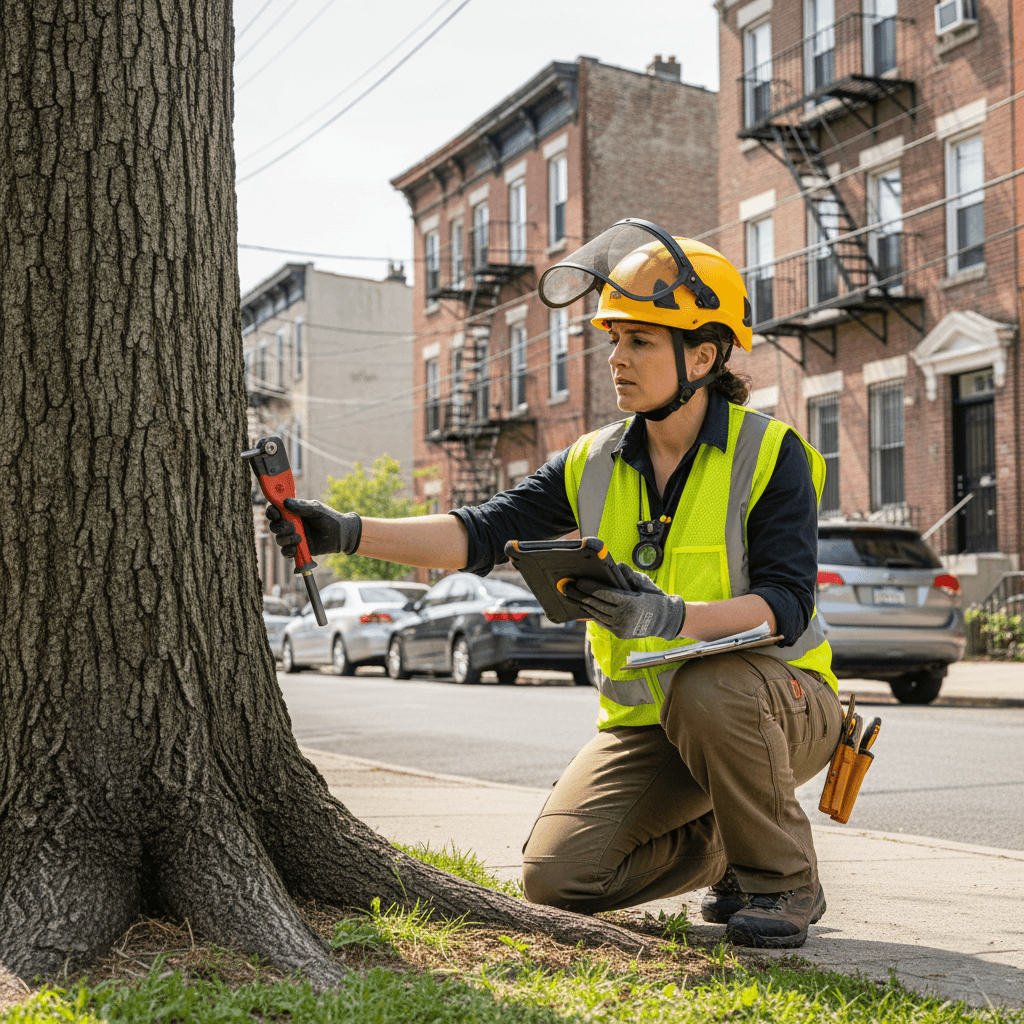
Union City is one of the most densely populated cities in America, which creates very unique spatial limitations for tree work. Residential neighborhood properties and those located along 32nd St have extremely limited yard space due to the proximity of buildings, fences, and/or property lines. In addition, the distance between the property line and the first building line is usually measured in feet rather than yards.
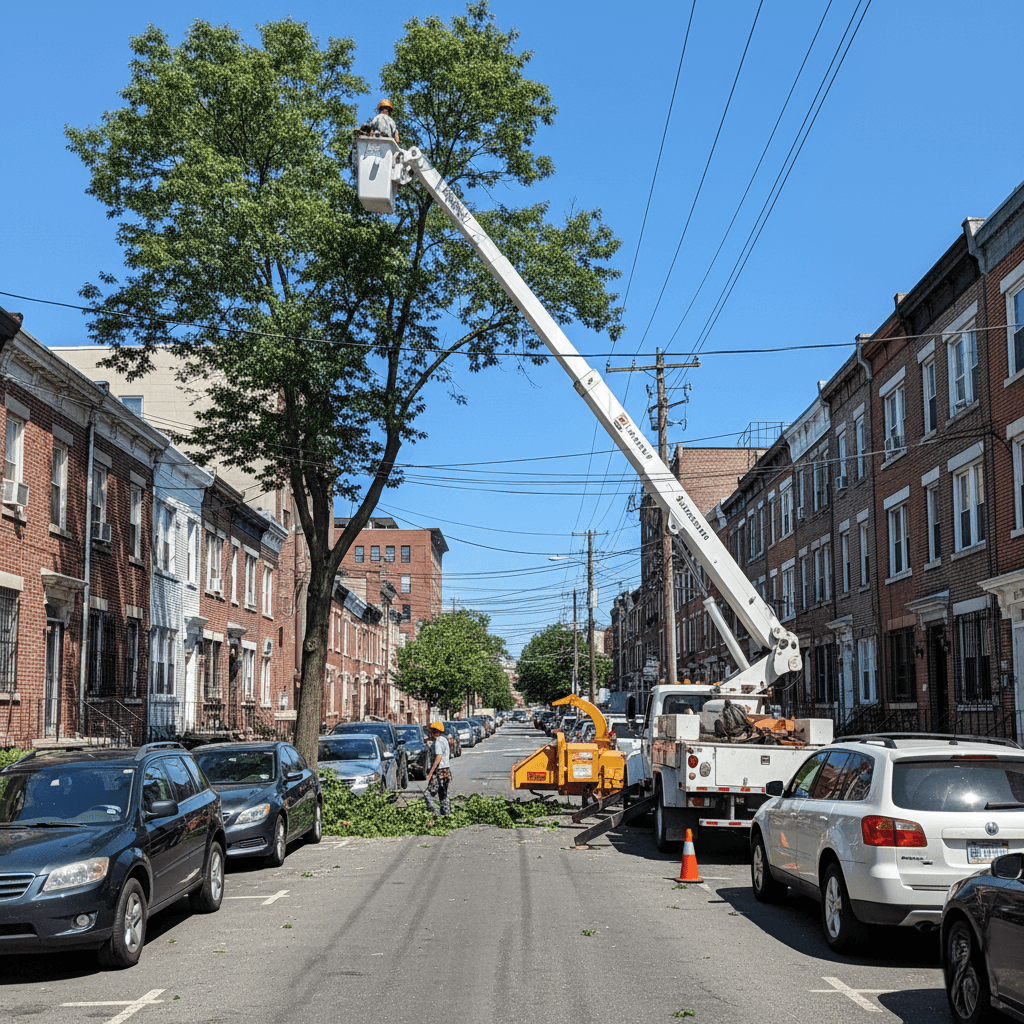
The extreme closeness of these two boundaries severely limits the ability of standard bucket truck equipment to position itself and provide a safe area to drop branches. Bucket trucks require a significant amount of space to safely operate and stabilize. There are numerous Union City properties where the available space does not allow for the safe operation of standard bucket truck equipment. Therefore, alternative methods must be used to accomplish the required tree work and meet safety standards.
Climbing in Extremely Confined Areas
Climbers working in confined areas are exposed to increased risk as there is less space to move about. The confined space will also magnify the results of an equipment malfunction or an incorrect calculation. Therefore, professional crews must continually adjust their method of performing tree work to accommodate the available working space while adhering to safety guidelines.
Equipment Access Restrictions
Narrow driveways, small gates, and side yard restrictions prohibit large equipment from accessing many tree locations in Union City. Most chipper and stump grinder equipment cannot pass through the 36-inch gates commonly found in Union City. Therefore, crews must manually carry debris long distances or utilize specialized compact equipment.
Multi-unit dwelling rear-yard trees pose special access problems. Often, multi-unit dwellings do not provide direct access to the rear yard from the street. Crews must transport equipment through the buildings, around structures, or over obstructions, significantly increasing the time spent on each project and its complexity.
Trimming Between Two Buildings
Trimming trees between closely spaced buildings are some of the most difficult trimming situations. These locations provide little to no room for error and provide little to no room for equipment operation. The branches must be carefully lowered through the narrow space between the buildings without causing damage to either of the adjacent buildings.
Due to the proximity of the buildings, a variety of protection measures are taken, such as wall padding and ground coverings. A single mistake could result in thousands of dollars in damages. This constant vigilance and precision in technique distinguish professional urban tree services from general tree services.
Obstacles Created by Power Lines Throughout the City
Overhead power lines crisscross Union City’s neighborhoods, providing constant challenges for tree trimming services. Trees naturally grow towards the source of light and therefore often grow into overhead power lines. The trimming of these trees requires specialized knowledge and adherence to strict safety procedures.
In order to trim near energized power lines, a tree worker must be a line-clearance qualified arborist who has obtained specific certifications. Standard tree workers are prohibited from operating within 10 feet of a power line. This specialization limits the number of qualified tree workers available to perform this type of work and makes the job even more complex.
Additional Scheduling Challenges from Utility Coordination
Utility coordination adds additional complexities to the scheduling of tree work. Tree companies may need to schedule temporary power outages or obtain assistance from the utility company. All of these coordination activities add to the length of time it takes to complete a tree job and require advanced planning that may not be anticipated by the property owner.
Primary Line Clearance Requirements
Utility companies have primary distribution lines that carry thousands of volts and require significant clearance zones to be maintained. Property owners, however, are responsible for maintaining clearances between scheduled utility maintenance cycles. Failure to maintain adequate clearances can result in power outages to the entire neighborhood.
Trees located along Summit Avenue and other major corridors are subject to particularly intense scrutiny by utility companies. Due to fast growth rates, trimmed trees quickly re-establish contact with power lines. Property owners should plan for regular maintenance or consider replacing species that consistently come into contact with power lines.
Property Owner Responsibility for Secondary Service Lines
Service drops connecting primary lines to individual properties are the property owner’s responsibility to maintain. Unfortunately, many homeowners incorrectly assume that utility companies are responsible for all line clearance. Incorrect assumptions lead to potentially dangerous situations and liability issues.
Tree branches rubbing against service lines damage the insulation and create fire hazards. Wires damaged by wind rub against trees, ultimately failing when the next storm hits. Regular pruning and trimming by trained professionals eliminates these hazards and reduces the risk of costly repairs and downtime.
Parking and Street Access Obstacles
The severe parking shortages in Union City create significant logistics problems for tree-trimming operations. The equipment trucks, chippers, and work vehicles require a significant amount of street space. Frequently, it is impossible to find a legal place to park near the work site. As a result, companies must work with local parking enforcement to secure adequate parking.
Lane closures and traffic control are frequently needed for street tree work. Permit acquisition and implementation of proper safety procedures create added cost and delays to what appear to be simple projects. Both factors extend project timelines beyond the expectations of property owners.
Throughout Union City’s residential neighborhoods, parking is always at a premium. Homeowners understandably are resistant to giving up valuable parking spaces for tree work. Professional companies must therefore strike a delicate balance between meeting operational needs and maintaining good relationships with neighbors and adhering to local parking regulations.
Temporary Loading Zones
Large-scale tree projects require temporary loading zones to facilitate the removal of equipment and debris. Securing these zones typically requires permit applications and advance notification to nearby residents. The application process can take anywhere from several days to weeks, which can delay urgent tree work.
Emergency tree situations further complicate the problem of finding suitable parking. When emergency tree work is required (i.e., a tree is down or damaged) to ensure public safety, the need for permits must be balanced against the urgency of addressing the hazard. In extreme cases, companies may need to ignore parking regulations to protect people from hazardous conditions.
Protection of Neighbor Vehicles
Vehicles parked along the streets of Union City are vulnerable to being struck by falling branches or equipment used in the trimming process. Professional companies employ extensive protocols to protect the vehicles of nearby neighbors, including advanced parking notices and physical barriers. Nevertheless, closely parked vehicles continue to pose a serious concern to conscientious crews.
Many property owners do not realize that tree work affects the parking of neighboring properties. It is critical to communicate with nearby neighbors before beginning a project. Poor relations with nearby neighbors can impede progress on a project or generate complaints to local authorities.
Multi-Story Building Proximity Concerns
The high concentration of multi-unit housing in Union City contributes to several complexities in the tree trimming process. Working with branches that are located near a three-story apartment is hazardous because it involves working at extreme heights next to occupied homes. Homeowners understandably want assurances regarding the proximity of equipment to windows and potential risks to their homes.
When branches grow even with or above windows on upper-story apartments, homeowner attitudes toward pruning decisions are typically strong. In order to reach an agreement regarding tree health, owner preferences, and homeowner concerns, a tree technician needs to develop excellent communication skills that go beyond the technical aspects of tree pruning.
When there are branches adjacent to buildings, technicians must be very cautious in protecting building materials such as siding, roof,s and architectural details during the tree pruning process. A single scratch on vinyl siding or a damaged gutter system will lead to potential litigation and liability concerns. It takes a lot of time and effort for professionals to put protective materials in place that homeowners don’t see.
Window and Exterior Protection Protocols
Before entering the zone where branches are being pruned, all windows adjacent to the area of pruning must be boarded up or heavily padded to prevent breakage. The potential dangers of flying wood chips, dropped branches, and equipment come into play when branches are being pruned. Boarding and pad installation and removal can also be time-consuming, and they can increase the length of the project.
Property owners of historic buildings and/or those with unique architectural characteristics must exercise great care. If you are located near Hudson Presbyterian Church or another landmark, you cannot afford to damage any irreplaceable architectural features of your property. The increased caution that comes with preserving historic architectural features slows down the work pace but preserves community assets.
Confined Space Debris Removal Issues
Debris removal from the trimmed branches and wood from the various Union City properties presents a number of logistical difficulties. Because of the small size of the yards in Union City, there is no area to stage the debris until it has been chipped. Access routes are too narrow for equipment to be placed in optimal positions. Hand carrying branches through buildings or over obstacles greatly increases labor time. For example, what may take one hour to complete using a chipper in a location directly accessible by the chipper may take three hours to complete hand-carrying the branches from a location inaccessible to the chipper. There are many labor hours that are added to a job that were not anticipated by the property owner, who expected a fast, low-cost job.
Street-side chipping operations must comply with both traffic flow and pedestrian safety. Chippers and debris piles cannot block sidewalks. Ongoing debris removal is needed to ensure a safe path for pedestrians and automobiles.
Distance Factors Relative to Disposal Sites
There are no suitable disposal sites within Union City. As a result, crews must travel long distances to dispose of the debris, which wastes a lot of time. When dealing with large projects, the number of trips that crews must take to dispose of the debris will result in much greater costs to the property owner than would be incurred if there were disposal sites closer to the property.
Some property owners ask for the ability to retain wood for use as firewood or mulch. While this is a thoughtful gesture, retaining large amounts of wood in the small yards of Union City often results in unrealistic expectations of what can be stored in the yard. The realistic assessment of storage space in the yard prevents disappointment upon completion of the job.
Coordination with Multiple Stakeholders
In Union City, tree work is seldom limited to the property owner. Multi-family buildings involve coordination among many tenants. Street trees involve coordination with city agencies. Trees located along property lines involve coordination with neighboring landowners. The coordination complexities that exist in urban tree work distinguish them from less complicated rural tree work.
Advance notice of tenant notification is required for apartment buildings so that residents are aware of when to relocate their vehicles, close their windows, etc., and what to expect in terms of noise disruption. Property managers must assist with facilitating this coordination.
Permits for City Agencies to Perform Work on Street Trees Involve Bureaucratic Processes
For many property owners, obtaining permits from city agencies to perform work on street trees is a bureaucratic nightmare. Applications, inspections, and approval times far exceed the typical timeline for private property owners to obtain permits for work to be performed on their own trees. Understanding the municipal regulations governing tree work is what differentiates experienced urban tree services from those inexperienced with city regulations.
Homeowners Association (HOA) Considerations
In addition to securing approvals from property owners, many HOAs have their own set of regulations and guidelines governing the type of tree work allowed in association-governed communities. Many HOAs have minimum standards for maintaining the appearance of landscaped areas, including trees, and may have strict guidelines for making changes to the exterior of a home, including trimming or removing trees. By securing approvals from the HOA prior to initiating the tree work, a tree technician can avoid unnecessary conflict with the property owner and potential fines.
Ownership of Shared Trees
In areas of Union City where trees are shared among multiple property owners, disputes arise regarding who is responsible for paying for tree pruning. Determining who should pay for tree pruning that benefits multiple property owners requires mediation skills in addition to arboriculture skills. Many urban tree services serve as mediators to resolve disputes between property owners.
Limitations of Weather Windows
Urban environments like Union City magnify the effects of weather on tree work scheduling. During winter months, snow creates parking and accessibility issues that can last for days after the storm. During summer months, heat radiates from pavement and buildings, creating a hazard for tree technicians working in full safety gear.
Additionally, wind that funnels through buildings creates hazards for tree technicians working in windy conditions. What may be considered safe wind speed in open areas may become hazardous in urban canyons. A conservative approach to weather limitations ensures the safety of tree technicians, but it can be frustrating for property owners who are looking for prompt completion of the project.
Rain creates several complicating factors in addition to the obvious safety concerns. Rain creates hazardous conditions for tree technicians to climb and operate equipment. Additionally, rain makes the weight of debris significantly heavier, placing additional strain on equipment and raising the costs associated with disposing of the debris. These weather-related delays are uncontrollable and can significantly impact scheduling.
Noise and Disruption Management
Tree trimming creates significant noise from chainsaws, chippers, and other equipment used in the trimming process. This noise can disrupt dozens of homes in densely populated neighborhoods. Professional tree technicians must weigh the efficiency of completing the trimming work against the disruption caused to the neighborhood.
Residential zoning regulations restrict the hours during which noisy work can be done in residential areas. Some cities restrict early morning or late evening tree trimming. The limited number of hours that can be worked reduces the amount of work that can be completed in a day, thereby extending the duration of the project.
Properties located near schools, medical facilities, and commercial establishments require special consideration for the impact of disruptions. Scheduling the tree trimming work around these considerations creates additional complexity. Flexibility and communication are just as important as technical skills for tree technicians.
Specialized Equipment Needed for Urban Environments
Standard equipment for tree services is often not adequate for the urban environment of Union City. Specialized compact chippers, narrow boom trucks, portable rigging systems, and other equipment become necessary investments. These specialized pieces of equipment are expensive, and they are used primarily for difficult-to-access urban work.
Not all tree services have invested in the equipment necessary to complete many urban jobs. Those who lack the specialized equipment cannot safely trim trees in many of Union City’s urban areas. The requirement for specialized equipment in urban areas creates service gaps where only a handful of companies have the necessary equipment.
Maintenance Costs Associated with Urban Equipment
Operating in urban environments places a greater burden on equipment maintenance. Constantly maneuvering in tight spaces causes excessive wear on hydraulic systems and outriggers. Operating on pavement versus soil causes excessive stress on equipment. These additional costs associated with urban equipment maintenance contribute to higher prices for urban tree services.
Sophisticated Rigging Systems for Difficult Branches
Advanced rigging systems allow controlled lowering of branches where traditional drop zones do not exist. These systems include multiple redirection points, friction devices, and synthetic rope, and they allow for precise placement of branches. Developing the advanced skills required to use these systems requires years of training and experience.
Properties throughout The Heights benefit from the advanced rigging skills that allow seemingly impossible tree work to be accomplished. However, these advanced rigging systems require a lot of time and effort, and they require multiple personnel. The increased safety and control provided by these advanced systems justify longer timelines and related costs.
Complications Created by Emergency Situations
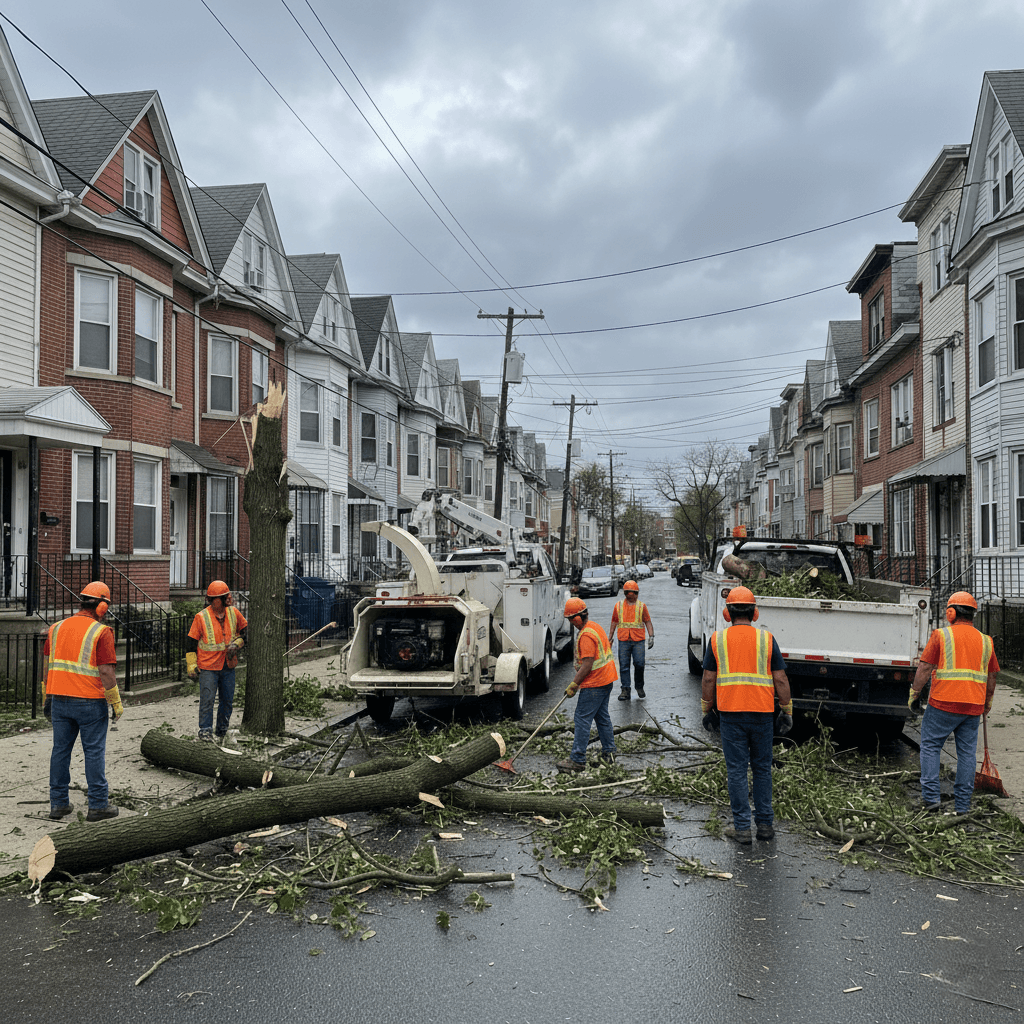
Storm-damaged trees in Union City create urgent situations that are complicated by each of the factors previously described. Emergency responses cannot wait for favorable conditions, parking permits, or coordination with neighbors. Companies must balance safety considerations with usual operating constraints.
Emergency nighttime work creates greater visibility and safety hazards than daytime work. Portable lighting systems installed in residential areas cause complaints from neighbors attempting to sleep. However, delaying dangerous tree removal due to safety concerns creates further damage or injury to people.
Increased Liability Concerns During Emergencies
During emergency situations, insurance and liability concerns are amplified. Rushed work increases the likelihood of accidents and unpredictable behavior from damaged trees. Experienced emergency responders must adhere to safety standards despite the pressure to quickly complete the work.
Cost Implications of Urban Challenges
Each of the challenges identified in this article translates to increased costs relative to suburban or rural tree work. Increased labor time, specialized equipment, permitting fees, parking complications, and coordination requirements all add costs. Property owners often express shock at the price quote for tree trimming in Union City when compared to their previous experiences.
Open Communication Regarding Cost Drivers Helps Educate Property Owners
Reputable companies communicate clearly with property owners regarding the drivers of their costs. Companies educate property owners on how their property conditions and circumstances influence their pricing. Clear communication builds trust with property owners.
Long-term investment in proper urban tree care supports property value preservation and prevents costly tree failures. Although deferred maintenance may seem like a good way to save money, it ultimately can lead to costly tree failure, which can cause extensive damage. Investing in regular tree maintenance is a sound fiscal decision, although it may mean spending more initially.
Selecting the Right Company to Provide Urban Tree Care
Not every tree company has the experience, equipment, and expertise to provide the quality of care needed for the unique urban environment of Union City. To select a qualified provider, look beyond the basic knowledge of tree care and evaluate the provider’s urban-specific capabilities.
Companies with extensive experience providing tree care services in Union City understand the challenges of the area and have developed successful strategies. They build relationships with utility companies and municipal officials. Their understanding of the urban environment is invaluable for efficiently and effectively performing work in the area.
Proper Insurance Coverage Is Critical in Densely Populated Areas
In densely populated areas like Union City, property damage risks are higher than in less populated areas. Therefore, comprehensive general liability and workers’ compensation insurance are critical to protect property owners from devastating financial consequences.
At Union City Tree Experts, we have earned our reputation by successfully navigating the unique challenges of urban tree trimming in our community. Our crews are trained to work in confined spaces and are equipped with the specialized equipment necessary to work in tight urban areas. We understand the complexities involved in working in our densely populated urban area. We are the qualified company to hire when searching for tree trimming near me in Union City. Whether you are seeking routine maintenance or emergency assistance, we offer the skilled urban tree services necessary to safely and effectively address the challenges posed by our urban environment.
LATEST POSTS