Menu
What Impacts Tree Removal Costs in Union City, NJ
Tree Removal Union City
The cost of tree removal is a necessary expense for many homeowners in Union City; by understanding the costs associated with removing a tree, you will be able to plan your budget accordingly for this important service. All these items are connected, which makes it difficult to provide an estimate of a tree removal cost without first doing a full assessment of the property. As such, the prices for tree removals in Union City can differ greatly depending on all the items involved. Typically, small trees range in price from $400 to $700; mid-sized trees range in price from approximately $800 to $1,800; large or hazardous trees can range from $2,500 and above. This article examines the components that affect pricing for tree removal near me within the context of our dense urban landscape.
Tree Size as the Primary Cost Driver
The primary cost driver of a tree removal is the dimension of the tree itself — specifically the height, trunk diameter, and total weight (or mass) of the tree. The larger the tree, the more labor time, equipment required, and project complexity will be. Larger trees will consume a greater number of resources in all aspects of the removal operation than smaller trees.
Cost of Removing Small Trees
Small trees are those that are less than thirty feet tall and have a trunk diameter of less than twelve inches. Common types of small trees in Union City include ornamental trees such as dogwood, crabapple, and young maple. The removal of small trees is usually a simple process because of their manageable size. Because they are so small, they are able to be removed using a smaller crew and less expensive equipment. In many cases, a small tree can simply be cut down at the base of the trunk and allowed to fall safely. This makes it very beneficial for properties located in residential areas to remove small trees at a low cost.
There are some limitations to removing small trees. For example, if the tree is located close to a building or utility line, it may be necessary to remove it in sections. While this does not greatly increase the cost to remove the tree, it can make the removal take longer. Additionally, the high population density in Union City limits the ability to use simple removal techniques for all small trees.
Removal of Medium-Sized Trees
Medium-sized trees range in height from thirty to sixty feet and have a trunk diameter of twelve to twenty-four inches. These trees pose a moderate challenge to remove. They have a substantial amount of wood and an extensive system of branches. Examples of common species of trees of this size include mature ornamental trees and moderately sized shade trees.
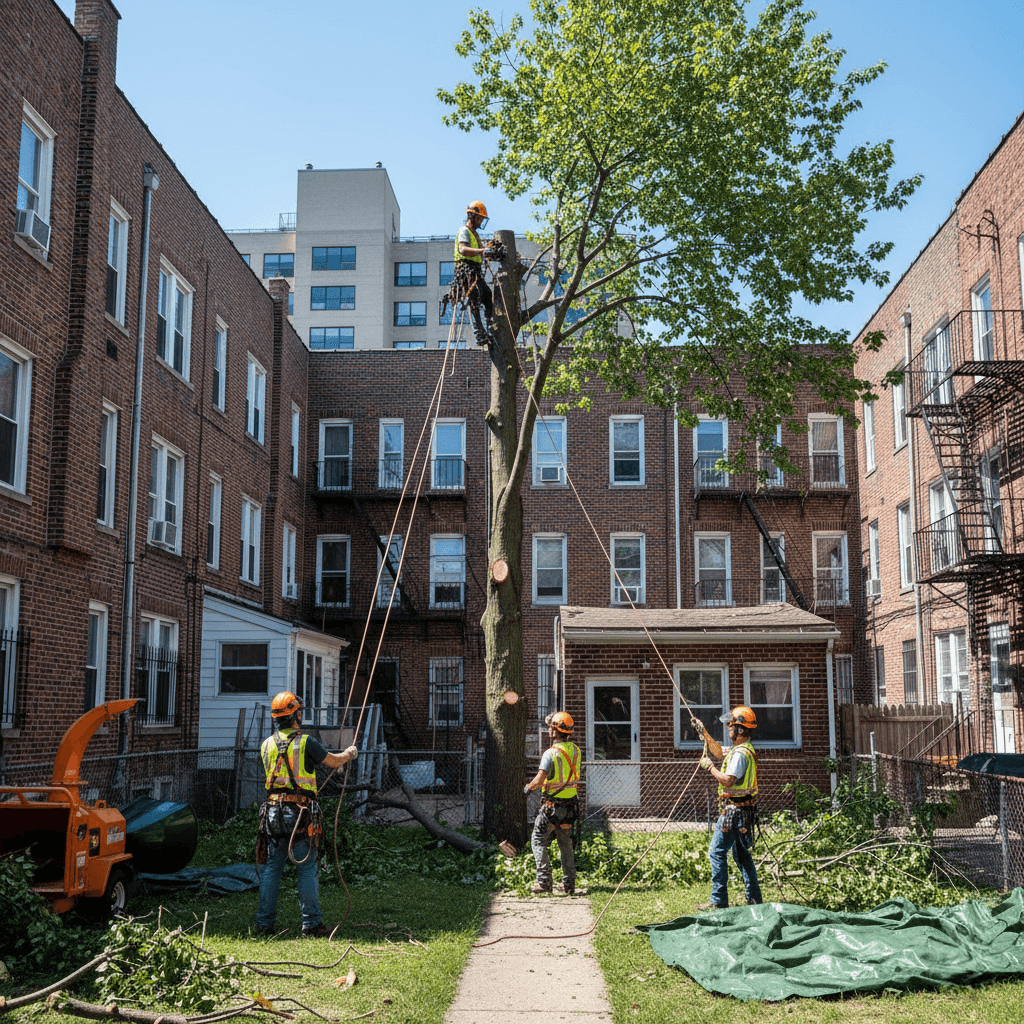
Because of the complexity involved in removing a medium-sized tree, the process requires the use of a bucket truck or having climbers who have access to advanced rigging systems. All branches must first be removed before each section of the trunk can be safely lowered. As a result of the time-consuming nature of this process and the need for skilled personnel, the cost of removing a medium-sized tree can be a significant investment for a property owner. However, the removal of a medium-sized tree is sometimes necessary to ensure public safety, provide clearance for construction projects, or renovate landscaping.
Many properties located along Summit Avenue and in Union City’s older residential neighborhoods have medium-sized trees. The removal of a medium-sized tree can be a costly undertaking, but it is sometimes necessary.
Cost of Removing Large Trees
Large trees exceed sixty feet in height and have a trunk diameter of greater than twenty-four inches. These large trees are often the most expensive to remove. They are typically the largest and oldest trees and often require specialized equipment to safely dismantle. In urban settings where there is limited space to maneuver, cranes are often used to assist in the removal of large trees. This equipment can add a significant expense to the removal, but it ensures a safe and efficient process. Properties located near the Transfer Station with mature street trees understand the need for specialized equipment to safely remove large trees.
Very large trees or historic trees can exceed the typical cost of removal. A very large or historic tree can require multiple crews working several days to safely dismantle the tree. Projects of this nature represent a significant financial commitment for the homeowner, but they are necessary to ensure safety or meet the needs of the property developer.
Characteristics of Tree Species and Wood Type
Tree species also affect the ease or difficulty of removal. Different species have different densities of wood, which affects how fast equipment dulls, and they have different growth patterns and structural characteristics that affect the complexity of removal. Hardwoods, such as oak and maple, have dense wood that dulls cutting equipment rapidly. The heavyweight of hardwoods presents an additional challenge for riggers when sectionally removing the tree. Softwoods, such as pine and willow, cut faster and easier than hardwoods, but softwoods may have brittle branches that break unexpectedly under cutting stress. Knowing the unique characteristics of each tree species allows professionals to properly plan the removal strategy for each tree. Union City has a wide variety of species of trees, each requiring a customized removal strategy.
Trees with Multiple Stems
Trees with multiple stems or co-dominant stems create weak attachment points that can fail unpredictably under cutting stress. Regardless of the overall size of the tree, trees with multiple stems will increase the difficulty and cost of removal.
Invasive Root Systems
Some tree species develop invasive root systems that interfere with the complete removal of the tree. Trees such as poplar, willow, and some species of maple develop extensive root systems throughout the surrounding soil. When it is necessary to completely extract a tree with an invasive root system, the increased complexity and time to do so will increase the cost of the removal. Complete extraction of the invasive root network may require the use of specialized equipment, such as excavators, and additional labor hours. While this increases the cost of the removal, it provides long-term benefits to the property owner by preventing interference from regrowing stumps or roots.
Factors That Influence Removal Difficulty Due to Tree Condition
The condition of a tree significantly influences the difficulty and cost of removal. Healthy trees have predictable structural integrity that allows for safer removal methods. Trees that are diseased, dying, or dead have unpredictable structural weaknesses that place the crew and surrounding property at risk.
Challenges of Dead or Dying Trees
Dead trees lack structural integrity and are therefore hazardous to climb. Dead trees also have a tendency to break unpredictably when cut, creating a hazard for both the crew and the surrounding property. Due to the increased risk associated with the removal of dead trees, many tree removal companies charge premium prices for the removal of dead trees.
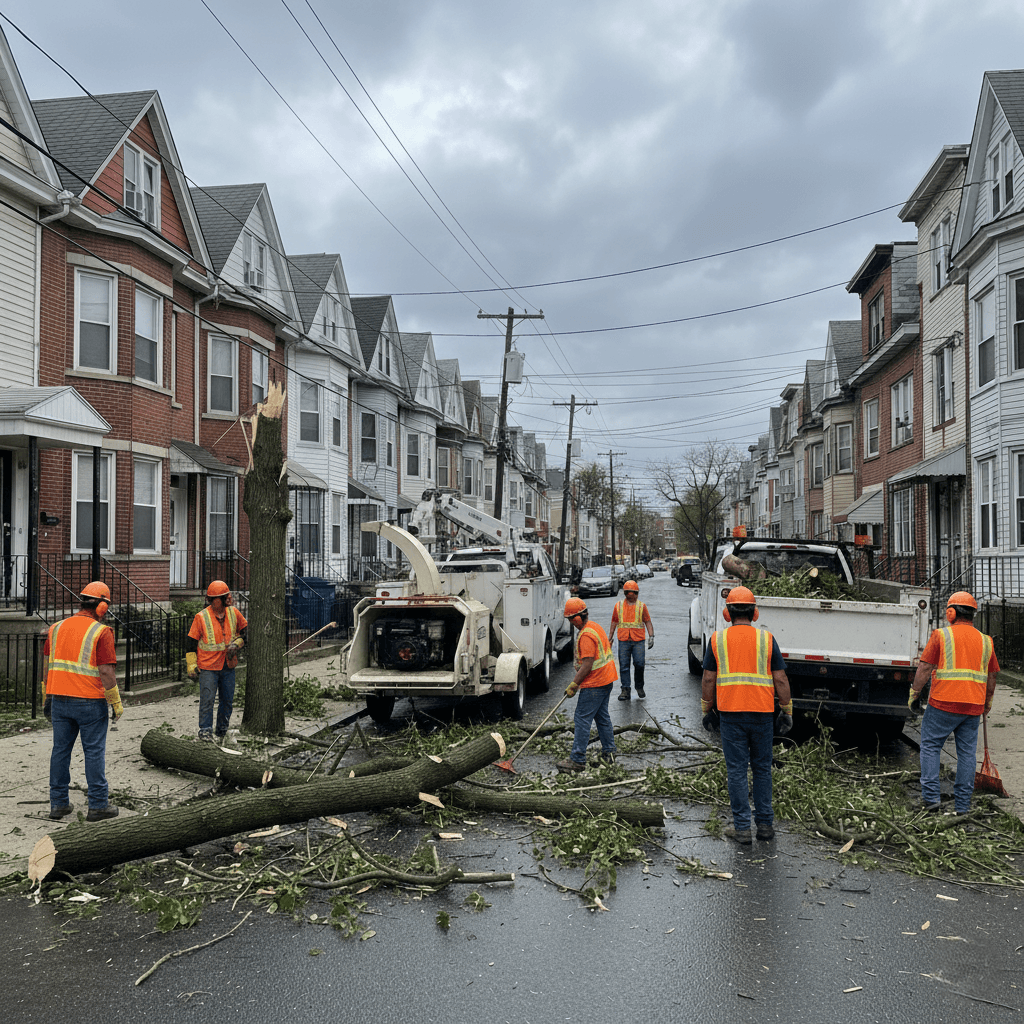
Additionally, trees damaged by storms have structural weaknesses combined with awkward leaning or broken tops. Storm-damaged trees require extreme care and often specialized stabilization prior to the removal of the tree. Emergencies caused by severe weather further complicate the removal of storm-damaged trees.
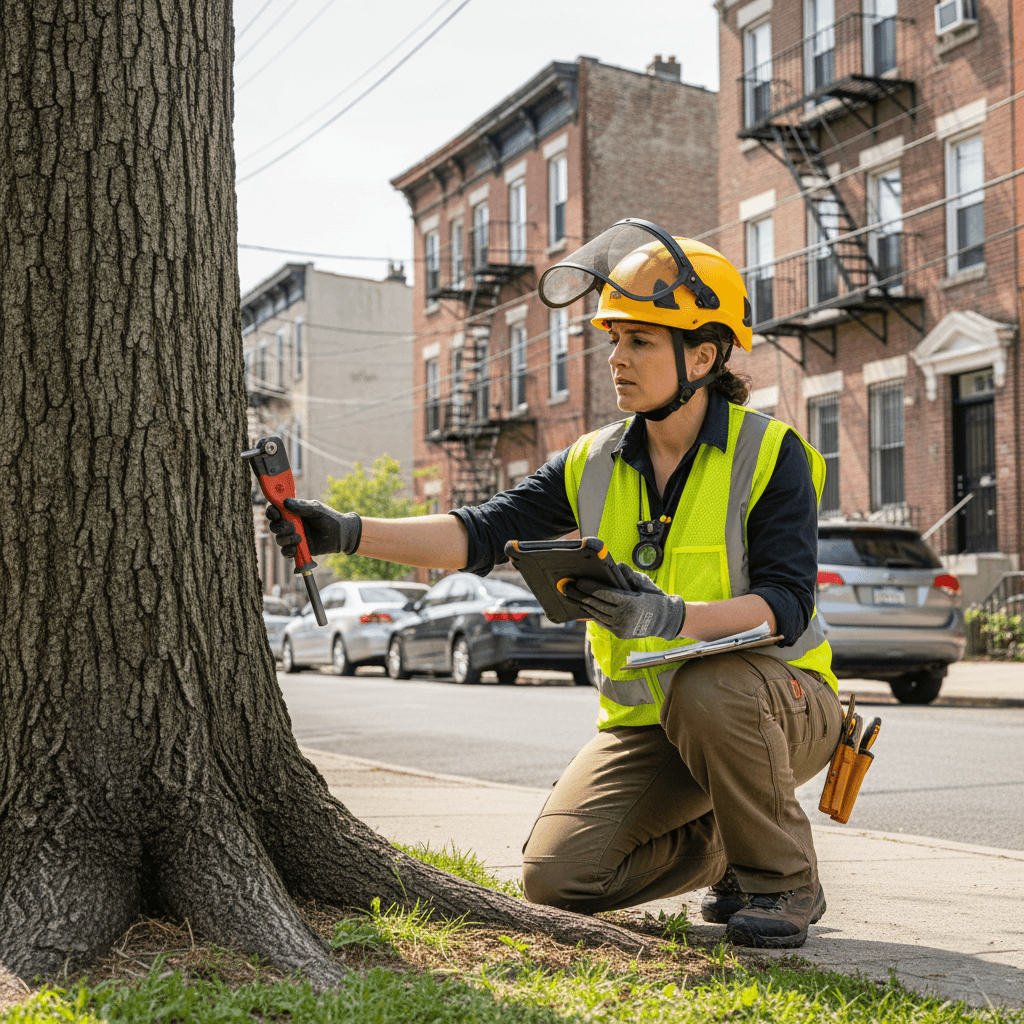
Internal decay within a tree significantly weakens the structural integrity of the interior of the tree, allowing it to collapse when subjected to the stresses of the removal process. Internal decay can cause a tree to appear healthy externally while being structurally unsound internally. The assessment of the extent of internal decay is important in determining the best course of action for the removal of a compromised tree.
Considerations for Diseased Trees
Trees that are diseased have progressive weakening due to disease and therefore require prompt removal. Prompt removal of a diseased tree typically results in a lower removal cost compared to waiting until the tree has weakened significantly. Diseased trees often require special handling to prevent the spread of disease. Some municipalities have regulations regarding the proper handling of certain diseases. Both of these factors contribute to an increased overall removal cost, but they help to protect the community tree resource.
Location and Accessibility Impacts
The area in which trees are located can have a huge effect on the complexity and cost of tree removal. The density of the area also has many implications that increase project difficulty.
Proximity to Buildings
Trees are closer to buildings than they would be in less developed areas (typically within 10 feet), and thus require much more detail in the removal process. Each branch and trunk section will need to be carefully rigged and lowered to avoid damaging the building(s). Due to the care involved, the labor time and costs associated with this type of removal will be higher.
In neighborhoods such as West Hoboken, where homes and garages often have trees directly next to them, protecting the home and garage from potential damage during the removal process is critical. The amount of time required for this type of removal and the number of pads needed for the protection of structures will drive up the cost.
Trees located between homes pose a particularly difficult removal scenario. The limited ability to maneuver and the fact that there are two structures to protect during the removal process greatly increase the complexity of the removal. In many cases, special rigging procedures will be required to safely remove the tree.
Utility Line Issues
Trees that are in contact with overhead power lines require a line clearance certified arborist. This certification limits the number of people who can do this type of work, and therefore increases the labor costs. Utility companies may require temporary shut-offs for coordination purposes.
Utility drops to individual properties are the responsibility of the homeowner, and therefore present another complication to removing trees in proximity to these types of drops. The removal company will coordinate with the utility company to ensure safe working conditions. Coordination with the utility company will increase the complexity and, therefore, the time required for the removal of the tree.
Access Restrictions
For backyard trees that are located in an area with no direct street access, the crew will need to go through the house or over obstacles to get to the tree. Carrying the cut wood sections away from the tree will greatly increase the labor requirement for the job. For properties that have very narrow gates or have restricted access routes, the cost will be increased due to the greater difficulty accessing the area.
Many Union City properties do not have enough space to deploy standard equipment to complete the removal. The need for compact specialized equipment greatly increases the cost and the time required to complete the removal, because this type of equipment works more slowly than standard equipment.
Removal and Disposal of Debris
Removing and disposing of debris from a tree removal project represents a large portion of the cost associated with the removal of a tree. Many property owners underestimate the amount of debris generated by one tree. A single large tree will generate many truckloads of debris, leaves, branches, and wood.
Distance to Haul Debris
Because Union City does not have a suitable location to dispose of debris within the city limits, the crew will need to haul the debris to a distant location, using fuel and wasting time. Because of the distance and the amount of debris, the crew will make multiple trips to haul the debris, and therefore, the total cost of the project will be greatly increased.
Facility Disposal Fees
Fees for disposing of debris vary greatly depending on the type of debris and the volume of debris being disposed of. Generally, green waste costs less than construction debris, but the volume of debris generated by a large tree will result in large disposal fees. These fees are passed along to the property owner as part of the total price of the removal.
Options to Keep Wood
If a property owner wishes to keep the wood from the tree to burn for firewood, this will reduce the disposal cost, but the property owner will be responsible for storing the wood. There are times when this is impractical due to the compact nature of properties in Union City. When this is determined to be realistic, it will prevent any unpleasantness for the property owner.
Chipping Services
Many property owners will request that the branches and smaller sections of wood be chipped for mulch for landscaping. This reduces the amount of debris hauled, and it provides a usable product for the property owner. Chipping will incur a fee that will be somewhat less than hauling and disposing of all the debris.
Premium Pricing for Emergency Work
Trees that have failed or been damaged by storms and require immediate removal command premium pricing. Emergency services are provided outside regular business hours and cause disruptions to regularly scheduled work. Therefore, the property owner will pay a higher rate for emergency services.
Emergency services cannot wait for scheduling to occur normally. Property owners will pay the higher rate for emergency services to prevent injury or damage to the property. If the storm caused the tree to fall onto a structure covered under homeowners’ insurance, the property owner may recover a portion of the emergency removal costs. Storms can create temporary shortages of available crews. Higher demand for fewer available crews creates higher prices for the same services.
Non-Emergency Work Following a Storm
Properties that schedule non-emergency work after a storm may find themselves competing with other property owners for the limited number of available crews. Therefore, property owners may want to consider scheduling non-emergency work before scheduling emergency work.
Requirements for Permits and Related Fees
As stated above, Union City has regulations regarding tree preservation that require permits for the majority of removals. Permit application fees, inspection costs, and processing time add to the overall cost of the project. Understanding the regulations in place in Union City will help prevent delays and compliance issues.
Typically, the permit cost will range from $75 to several hundred dollars, depending on the size of the tree and the circumstances surrounding the removal. Some removals may also require replanting of new trees, which adds to the overall cost of the removal. Many tree removal professionals include permit application and coordination with municipalities as part of their overall service package.
When expedited permitting is available, it may require an additional charge, but it will expedite the project timeline. Emergency removals may qualify for permit waivers, but documentation requirements will still apply. Managing the regulatory environment is a hidden cost associated with completing a tree removal project.
Other Service Considerations
Many tree removal projects involve supplemental services that affect the overall cost of the project. Stump grinding, root removal, and site cleanup are three examples of supplemental services that are included separately from the basic removal of the tree.
Stump Grinding Cost
Stump grinding is the process of grinding down a stump to a depth below grade level. The cost for stump grinding is generally between $250 to $550 per stump. Separate from the basic removal of the tree, the stump grinding process will require specialized equipment and additional mobilization for the crew. Homeowners in the Bergenline Avenue neighborhood, as well as others, benefit from having the stumps removed to eliminate tripping hazards and to free up space.
Full Root System Extraction
Root system extraction is a more expensive method for eliminating a stump and roots, but it is a necessity for construction projects. Full root system excavation involves the removal of the entire root system of the tree. This method of elimination is more expensive, and it prevents future complications related to the original tree. This thorough approach to stump removal is justified for certain situations.
Restoration of Landscaping After Tree Removal
After a tree is removed, the bare area left behind will likely require soil replacement, grading, and possibly the planting of new vegetation. The cost of restoring the landscaping will depend on the desired outcome. Establishing a simple grass lawn will be less expensive than creating an elaborate landscape design.
For property owners considering renovating or making changes to their landscaping, it is recommended that they plan and integrate their tree removal decision with their overall project plan. This integrated approach will allow for the most efficient and cost-effective solution to minimize unnecessary work and wasted resources. Professional landscapers are able to provide comprehensive service packages for all of the property owner’s needs.
Pricing Fluctuations Based Upon Time of Year
Demand for tree services fluctuates throughout the year due to seasonal demand. Typically, winter months see reduced demand, resulting in potentially lower prices for tree services. However, the cold weather and snow cover can limit the accessibility to perform some removals.
Summer is considered the peak time for tree services, and as a result, prices tend to be higher, and schedules are busier. Spring and Fall represent moderate demand, reasonable pricing, and availability. By adjusting their scheduling accordingly, property owners are able to get the best price for their services.
Storm seasons can lead to unanticipated spikes in demand, causing prices to temporarily increase. It is recommended that property owners attempt to schedule non-emergency tree removals around the time of major storms to avoid the inflated pricing.
Insurance Coverage Implications
Homeowners’ insurance policies may cover the removal of trees if the trees damage insured structures. However, most insurance policies exclude the removal of trees that are removed for preventative maintenance or construction purposes, regardless of the condition of the tree. Understanding the terms of the insurance policy will help to avoid unexpected financial burdens.
Damage to structures caused by storm damage may qualify for coverage. Depending on the terms of the insurance policy, deductibles and coverage limits may affect how much of the expense the property owner will be responsible for covering. Timely filing of the insurance claim will help to maximize the benefits recovered from the insurance company.
Most homeowners’ insurance policies do not cover the removal of trees that are removed for maintenance, construction, or preventative safety purposes. Property owners will be responsible for paying for these discretionary removals. Budgeting appropriately will help to alleviate the financial burden of necessary tree work.
Comparing Multiple Quotes
To assist property owners in determining whether the quote received for their tree removal project is competitive and to help them understand what constitutes fair market pricing, property owners should obtain quotes from multiple qualified tree removal companies. All quotes should clearly itemize the cost of the removal, including the cost of disposal, stump grinding, and cleanup. Breakdowns will provide property owners with the opportunity to compare prices.
Quotes that appear suspiciously low may be indicative of the contractor not carrying sufficient insurance, hiring inexperienced employees, or cutting corners. Conversely, excessively high quotes may indicate inefficiencies in the contractor’s operation or that the contractor is taking advantage of the property owner. Fair quotes that take into consideration the complexities of the job will generally fall within a moderate range.
Contractors who provide detailed explanations of the cost drivers for their quotes are demonstrating professionalism and transparency. Contractors who educate the property owner about the cost drivers for their project help build trust and prevent misunderstandings.
More Than Just Low Bids
While getting the lowest bid possible is important to saving money, the lowest bid is not always the best value for a tree removal project. Companies that invest in the training of their employees, in maintaining quality equipment, and in carrying comprehensive insurance will charge a little bit more for their services, but they will provide far superior service quality. Homeowners in The Heights benefit from the standards of quality service provided by reputable contractors.
Long-Term Relationships
Local contractors with a reputation for doing quality work and who have built relationships with the municipalities of Union City have a better understanding of the challenges of the area, and they will be able to facilitate the removal process more efficiently than contractors who are unfamiliar with the area. Local contractors know the ins and outs of the area and will be able to navigate through the bureaucratic red tape and prevent common pitfalls that can be encountered in this type of work.
Recommendations for Planning and Budgeting
Property owners should budget conservatively when planning for a tree removal project. As previously mentioned, unforeseen complications will often arise, increasing the cost of the project beyond the initial estimate. Having a financial cushion will help to prevent delays in the project and ensure that the project is completed as originally planned.
Regular tree maintenance can reduce the ultimate cost of removing a tree by identifying potential problems early in the process and resolving them before they become more serious and more expensive. Identifying potential problems early will also help to extend the life of the tree.
Homeowners who are planning to undertake renovations or changes to their landscaping should include the removal of trees in their overall project planning. Integrating tree removal into their overall plan will help to ensure that the tree removal process is done as efficiently and effectively as possible, and it will help to minimize the total cost of the project. Having a comprehensive view of their project will also help to prevent duplicate work and wasted resources.
At Union City Tree Experts, we provide transparent, detailed estimates that help property owners understand exactly what impacts their tree removal near me costs. Our quotes itemize every component from initial assessment through final cleanup, ensuring no surprises at project completion.
LATEST POSTS