Menu
Union City Commercial Tree Removal: Key Insights
Commercial Tree Removal Union City
Property managers of commercial establishments have to be aware of how to handle trees in addition to the typical responsibilities of owning commercial real estate. Familiarity with your municipality’s regulations and rules regarding tree maintenance will help minimize potential liability and avoid costly errors that could result in financial loss and/or litigation. Regardless of whether you own a retail establishment located on Bergenline Avenue or are an office manager near Summit Avenue, understanding what is required by law for commercial tree removal can assist you in maintaining your properties as both a safe and visually appealing environment while also being in compliance with your municipality’s codes and regulations.

Regulatory Requirements for Business Properties
Union City has very restrictive tree preservation ordinances that are applied equally to commercial and residential properties. Before removing any deciduous tree larger than two inches in diameter at breast height (DBH), or coniferous trees larger than four inches DBH, business owners must first obtain permits. The purpose of these regulations is to preserve the urban canopy while also protecting the public’s health and safety in our commercial districts.
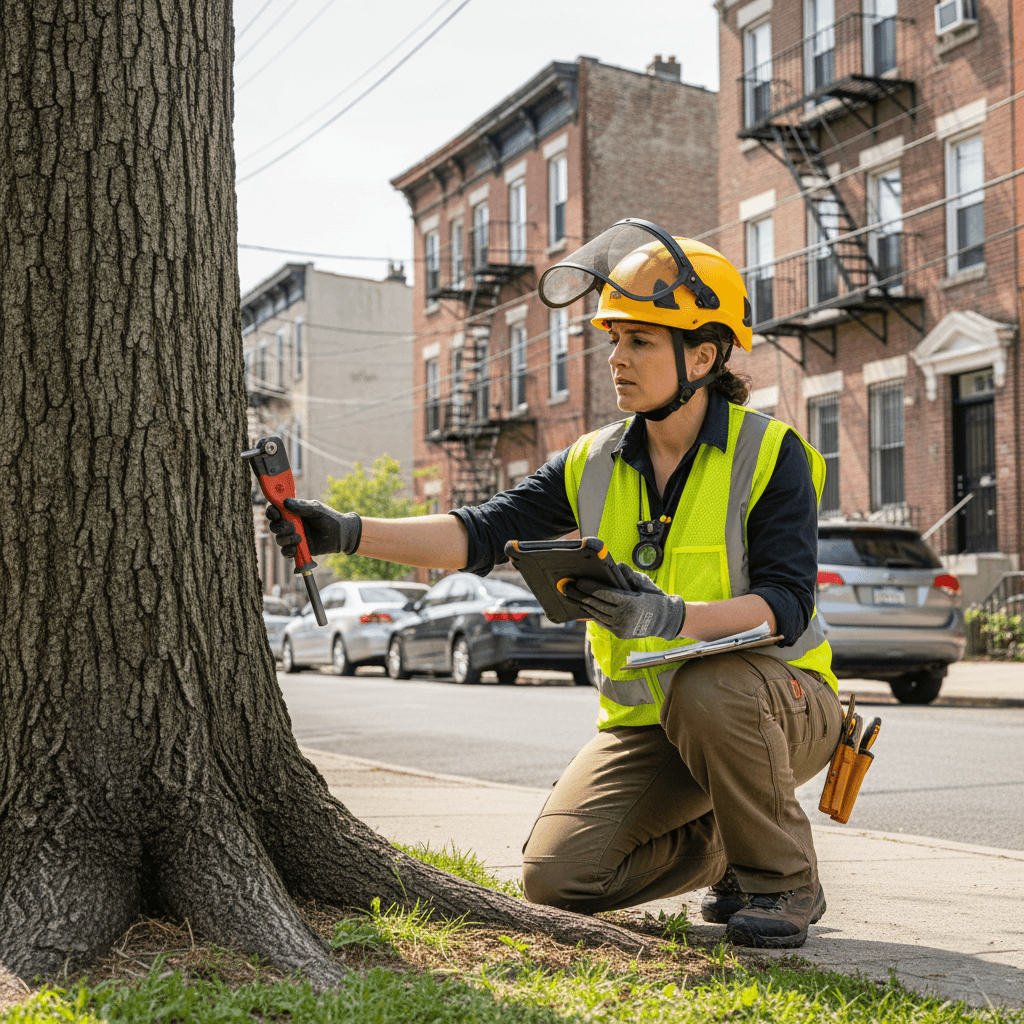
To apply to remove a tree, applicants must provide the Department of Public Works with a minimum amount of detail, including, but not limited to, a property survey of the area where the tree will be removed, the measurement of the tree to be removed, and the applicant’s reason(s) for removing the tree. Each application submitted to the Department of Public Works will be reviewed by the Tree Supervisor, who will conduct a site inspection of the property no later than 30 calendar days after receipt of the application. The Tree Supervisor will approve the application based on whether the tree in question presents any type of hazard to public safety, whether the tree obstructs or prevents needed repairs or improvements, or whether the tree is diseased or structurally compromised.
Emergency Removal Procedures
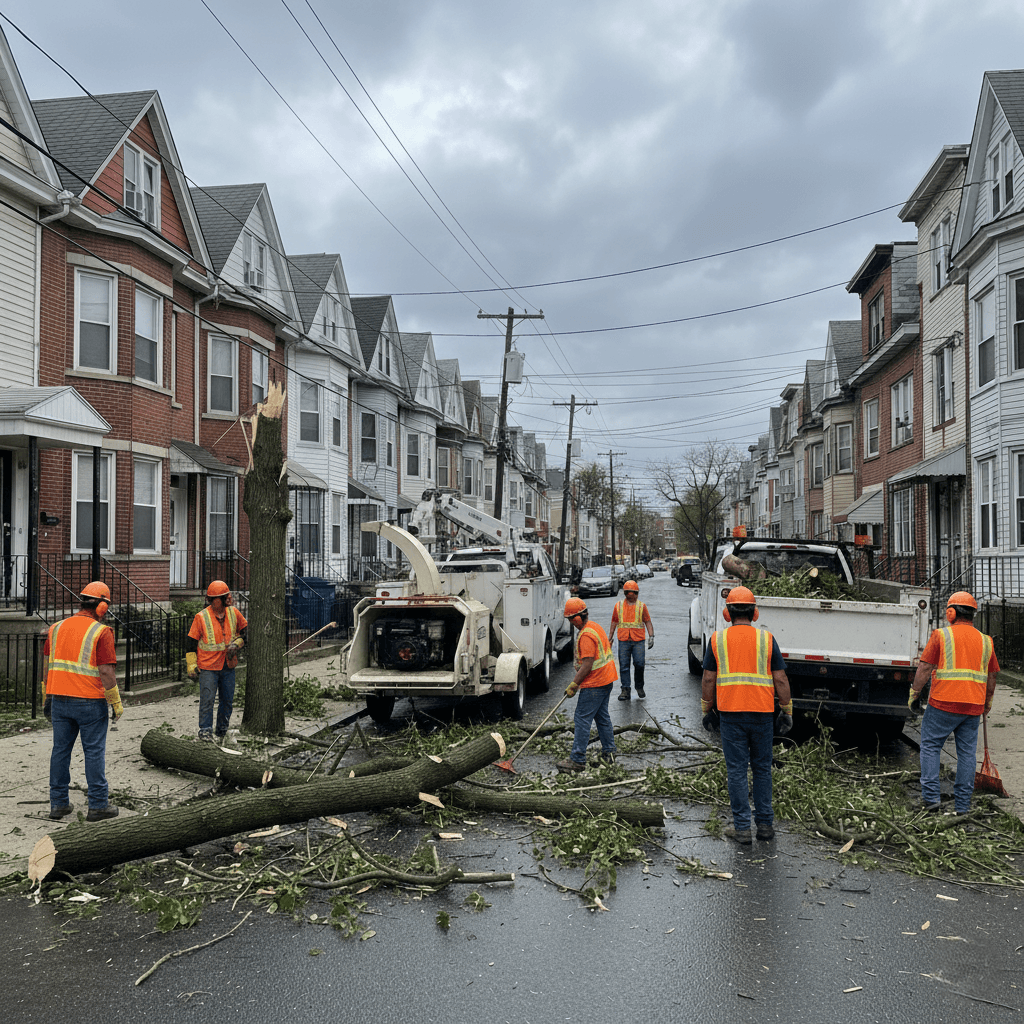
In some cases, emergency removal procedures will be required because of the dangerous situation created by a tree failing to stand, or being damaged by weather events such as heavy snow or windstorms, etc. In those cases, a business owner may immediately remove the tree in order to prevent injury to people entering the building, customers of the business, employees of the business, and/or other people in the vicinity of the tree. However, in the event that a tree is removed as an emergency measure, the business owner must notify the Department of Public Works in writing within five business days after removal. Written documentation establishing the reasons why the removal was deemed an emergency will help to protect the business owner from the possibility of being cited for violating any ordinance of the Township of Union City.
Liability Issues for Commercial Property Owners
Trees located on commercial properties create an enormous amount of liability to property owners that must be taken seriously. Liability includes, but is not limited to, customers, employees, or passersby being injured by falling branches, or by roots from a tree causing damage to adjacent sidewalks, or by a tree completely failing and landing on customers, employees, or passersby. With the courts increasingly holding property owners liable for providing a safe environment for customers, employees, and others on their premises, and for properly maintaining their trees to prevent harm to anyone on their property, business owners must take the responsibility for proper tree maintenance and removal of hazardous trees seriously.
Business owners should have adequate insurance coverage for their commercial property to protect themselves against liability resulting from damage caused by their trees. Coverage for tree-related incidents on their property should be included in their commercial general liability insurance policy. Some standard policies do not provide coverage for certain types of tree work, or provide limited coverage for serious accidents involving a tree. Therefore, business owners should carefully read their insurance policies to determine whether they have sufficient coverage to protect them in case of a serious accident. Businesses operating along busy streets and avenues, such as Bergenline Avenue, are particularly exposed to liability from pedestrians walking under the trees surrounding their businesses.
Workers’ Compensation Coverage Requirements
When contracting with a company for the removal of trees from your commercial property, business owners should verify that the contractor carries adequate workers’ compensation insurance coverage for tree work. Workers’ compensation insurance provides financial assistance to contractors for lost wages, medical expenses, and funeral expenses if their employees are injured on your property. Landscaping coverage is different from tree work coverage, and contractors must carry coverage specifically including elevated work and tree removal operations to be adequately insured. Contractors who fail to carry adequate insurance coverage place the burden of paying for their employees’ losses on the property owner.
Cost Factors and Planning
Tree removal costs for commercial properties are significantly higher than for residential properties because of the complexities involved, insurance requirements, and regulatory requirements. Trees located near buildings require specialized equipment and extra precautions to safely remove the trees. When budgeting for tree removal, business owners must factor in the cost of the actual removal, permits required for the removal, replacement trees, and the possibility of fines if the business fails to comply with the regulations.
If a business removes a protected tree without obtaining the required permits and does not replace the tree with an approved species, the Township of Union City may charge the business a fee of up to $1,000. Additionally, the business must either plant an acceptable replacement tree within 60 days of removal, or pay into the Township of Union City’s Tree Escrow Fund. By developing a plan prior to removal, business owners can minimize the costs associated with tree removal and maintain compliance with the Township of Union City’s regulations.
Choosing the Right Contractor
The selection of a qualified contractor to remove a tree from a commercial property requires care and attention to detail. Contractors must possess certifications from the International Society of Arboriculture (ISA) or other organizations that establish credibility and specialized knowledge related to tree removal. Before allowing a contractor to begin the removal process, business owners should verify that the contractor has both the general liability insurance and workers’ compensation insurance necessary to perform the work. Established contractors will provide a written proposal outlining the scope of work, total cost, and timeline for completion. They will also demonstrate knowledge of the Township of Union City’s permit process and assist the business owner in completing the required paperwork.
Certified contractors will handle all aspects of tree removal, including the permit process, and will ensure that the business owner complies with all applicable regulations. We have experience working with commercial clients throughout the Township of Union City. We manage the entire tree removal process, including the assessment, permitting, and professional removal of trees. As a result, we reduce the disruption to your business and assure your customers and employees that you are taking the necessary steps to protect their health and safety.
Requirements for Insurance Documentation
Business owners should request certificates of insurance from contractors to show that the contractor has liability insurance and workers’ compensation insurance that covers the removal of trees. The insurance coverage provided by the contractor should specifically address tree removal operations, and not general landscaping. Business owners should ensure that the contractor’s insurance policy has a minimum of $2 million per occurrence and an aggregate limit of $2 million for commercial projects. Business owners should also verify that the contractor provides the business owner with certificates of insurance that are current for the length of time that the contractor performs the removal work, and that the contractor provides the business owner with new certificates of insurance when the previous certificates expire.
Proactive Management of Trees on Commercial Properties
A proactive approach to managing trees on commercial properties reduces the number of emergencies and increases the lifespan of trees. A regular schedule of professional assessments identifies potential problems before they become serious enough to require removal of the tree. Proactively managing trees on commercial properties minimizes disruptions to your business and sends a message to your customers and the Township of Union City that you are committed to being a good neighbor and responsible property owner.
Benefits of Maintaining Well-Manicured Landscapes in the UEZ
Businesses operating in the Urban Enterprise Zone (UEZ) of Union City, New Jersey, benefit from having well-manicured landscapes, which add to the beauty of the area and attract visitors. Healthy trees on commercial properties provide shade for customers and employees, creating an inviting atmosphere for patrons and employees alike. While the aesthetic value of healthy trees is important, the liability risks associated with poorly maintained trees far outweigh the benefits. Failure to maintain trees and allow them to deteriorate creates liability risks that could lead to costly lawsuits and loss of revenue.
Scheduling and Timing Considerations for Removing Trees From Commercial Properties
Removing trees from commercial properties must be done in a manner that minimizes the inconvenience to customers, employees, and other stakeholders. Tree removal creates noise pollution, limits access to adjacent properties via blocked driveways, and may temporarily block entrances to commercial properties. Whenever possible, business owners should schedule tree removal projects during slower business periods to minimize the disruption to customers. Business owners should also inform neighboring businesses that share access to the same driveway or entrance, and advise them of the scheduled removal date. The permit approval process for commercial properties generally takes longer than for residential properties, and business owners should plan accordingly, especially if the removal of a tree is related to construction or lease agreement deadlines. Emergencies often involve premium pricing for removal services, and in many cases, expedited permit approval is not available.
Communicating with Customers Regarding Planned Tree Work
Business owners should notify customers of planned tree work through signs, social media, and direct communication, depending upon the circumstances. Notifying customers of upcoming disruptions to the normal flow of business demonstrates that the business owner cares about the welfare of their customers and that they are trying to be a considerate business owner. Providing customers with estimates of when tree work will be completed and alternatives for parking can further demonstrate a business owner’s concern for the convenience of their customers.
Community and Environmental Implications of Tree Removal Decisions Made by Commercial Properties
As important players in preserving the urban forest canopy of Union City, NJ, businesses have an obligation to make informed decisions when removing trees from their properties. The decision to remove a tree affects the aesthetic appeal of a neighborhood, impacts air quality, and influences how the community perceives the business. Responsible property owners must strike a balance between the need to maintain a safe environment for customers, employees, and the public, and the need to act as responsible stewards of the environment by replanting quickly and planting trees that will thrive for years to come.
Values Reflected in Union City’s Tree Preservation Ordinances
The tree preservation ordinances passed by the Township of Union City reflect the community’s values regarding environmental sustainability and economic development. Businesses that demonstrate their commitment to these values will build strong relationships with their neighbors and enhance their reputation as environmentally-conscious corporate citizens.
Record Keeping and Documenting Tree-Related Activities
Documenting all tree-related activities on your commercial property is essential to maintaining compliance with the Township of Union City’s tree preservation ordinances. Records should include, but are not limited to, permit applications and approvals, contracts with contractors, certificates of insurance from contractors, completion reports, and photographs of the trees before removal. These records will serve as proof of compliance with township regulations and support potential insurance claims if customers, employees, or other individuals are injured by trees on your property.
Obtaining Professional Assistance
Business owners seeking to remove trees from their commercial properties must navigate a complex regulatory environment that is unfamiliar to most business owners. Companies specializing in commercial tree removal services have experienced staff who know the regulatory process of the Township of Union City inside and out. These companies will handle all facets of tree removal, including assessing the trees to be removed, acquiring the necessary permits, coordinating with the township to inspect the property, and finally removing the trees. At Union City Tree Experts, we provide complete commercial tree removal services to minimize disruption to your business and assure your customers and employees that you are taking the necessary steps to protect their health and safety.
LATEST POSTS