Menu
Union City Tree Cutting Service Safety Standards
Tree Cutting Service Union City
When hiring a tree cutting service, you are looking for much more than an individual with a chainsaw and a truck. The safety standards that exist to protect all parties involved, i.e., homeowner(s), worker(s), and surrounding properties, help to identify those who provide safe professional tree services and avoid dangerous individuals who may be performing their own tree service. Understanding these basic safety regulations will help to prevent costly liability exposures while also providing assurance of quality tree work being performed. These comprehensive safety standards include: insurance coverage, professional certifications, specific equipment, and standard operating procedures. All of these items come together to produce a safe working environment for the consumer and the employees of the company.
Protecting Yourself Through Essential Insurance Coverage
Insurance is an essential form of safety protection for each and every Union City homeowner and/or business owner, which must be verified prior to hiring a tree service company to perform work on your property. General liability insurance provides property owners with significant protection from potential financial ruin as a result of accidents occurring during tree work operations. Many property owners do not realize that they have no coverage until it is too late and the accident has created costly problems.
What Is General Liability Insurance?
General liability insurance protects against property damage claims and bodily injury claims related to your tree work operation. This type of insurance is extremely important if you hire a tree service company to cut down a tree and falling branches damage your home, vehicle, or a neighbor’s property. Most reputable tree trimming services carry a minimum of $1,000,000 in general liability coverage, and many carry higher amounts, such as $2,000,000 in coverage.
If you hire an uninsured or under-insured contractor, you are responsible for all damages. One accident could generate claims of several hundred thousand dollars. Since so much of Union City is densely developed, especially around Bergenline Avenue, homeowners are particularly vulnerable.
Homeowners need to obtain current certificates of insurance directly from the insurance company (not the contractor) to ensure that the policy remains active and that there is sufficient coverage. An expired or insufficiently insured policy will leave you in a very difficult position.
Why Workers’ Compensation Insurance Is Required
Workers’ compensation insurance is required to protect against job-related injuries sustained by employees. As one of the most hazardous occupations in America, tree work has an injury rate that far exceeds most other occupations. If a contractor does not carryworkers’s compensation insurance, an injured employee may file a lawsuit against you, the property owner.
Many contractors are dishonest and claim to have workers’ compensation insurance for landscaping purposes, but do not have the coverage for actual tree work. Due to the increased risk associated with tree cutting, this type of coverage is usually significantly more expensive. It is imperative to verify that the contractor carries specific coverage for tree work (cutting), not just general landscaping.
Regardless of whether a contractor employs one or numerous employees, in virtually all cases, the contractor is required to carry workers’ compensation insurance. Never believe a contractor when they say that insurance is not necessary. The cost of legal liability for a worker injury on your property could be financially devastating.
Why Professional Certifications Are Important
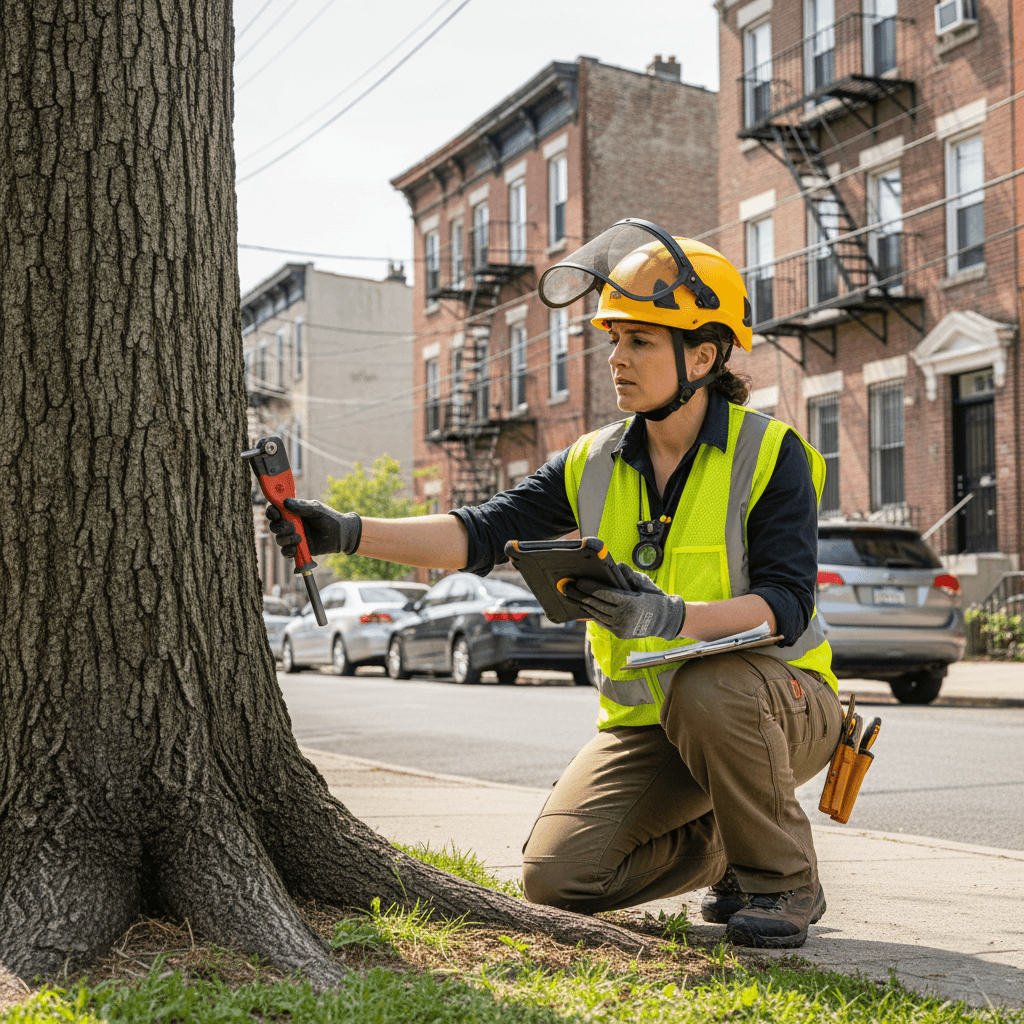
Hiring a legitimate tree cutting service will ensure that you have trained and certified professionals working on your property. Trained and certified professionals are knowledgeable regarding proper tree care practices and safety procedures. Certification demonstrates the contractor’s willingness to adhere to industry standards and participate in ongoing education and training. Legitimate certifications differentiate qualified arborists from those without training.
What Does an ISA Certified Arborist Credential Represent?
The International Society of Arboriculture offers certification to arborists who complete comprehensive exams that include topics such as tree biology, diagnosis, maintenance, and safety. To maintain ISA certification, arborists must continue their education. Therefore, ISA certification demonstrates a serious commitment to professionalism.
Arborists who are ISA certified understand the mechanical structure of a tree, safe and proper tree cutting techniques, and how to assess hazards. With their understanding of these concepts, they reduce the occurrence of accidents while increasing the quality of work performed on your property. IISA-certifiedarborists are the best choice for your property in The Heights because they base their decision-making process on science.
To verify an ISA certification, simply go to an online database. This simple check verifies that the certifications are up-to-date and valid. Companies that employ multiple certified arborists represent a strong commitment to professionalism by their organization.
What Are Specialized Line Clearance Qualifications?
There are specific certifications needed to safely prune or remove trees adjacent to power lines. While arborist certification is a great start, line clearance certification is additional training that provides extensive electrical hazard training and identifies the minimum safe distances from energized lines. Any individual attempting to prune or remove trees adjacent to power lines and has not obtained specialized line clearance certification must keep a minimum of ten feet away from energized lines.
Since many Union City properties contain trees that are entwined with overhead utilities, only a properly qualified line clearance tree pruner should attempt to work close to electrical infrastructure. If you hire someone who is not qualified to work near power lines, you expose yourself and others to electrocution hazards.
OSHA Safety Compliance Standards
OSHA has created and established mandatory safety standards that all tree services are required to follow. OSHA’s safety standards cover many different aspects of safety, such as fall protection, operating equipment, and how to mitigate hazards. Contractor compliance with OSHA safety standards is a way to prove their commitment to their employees’ safety and to demonstrate their professionalism.
Fall Protection Systems
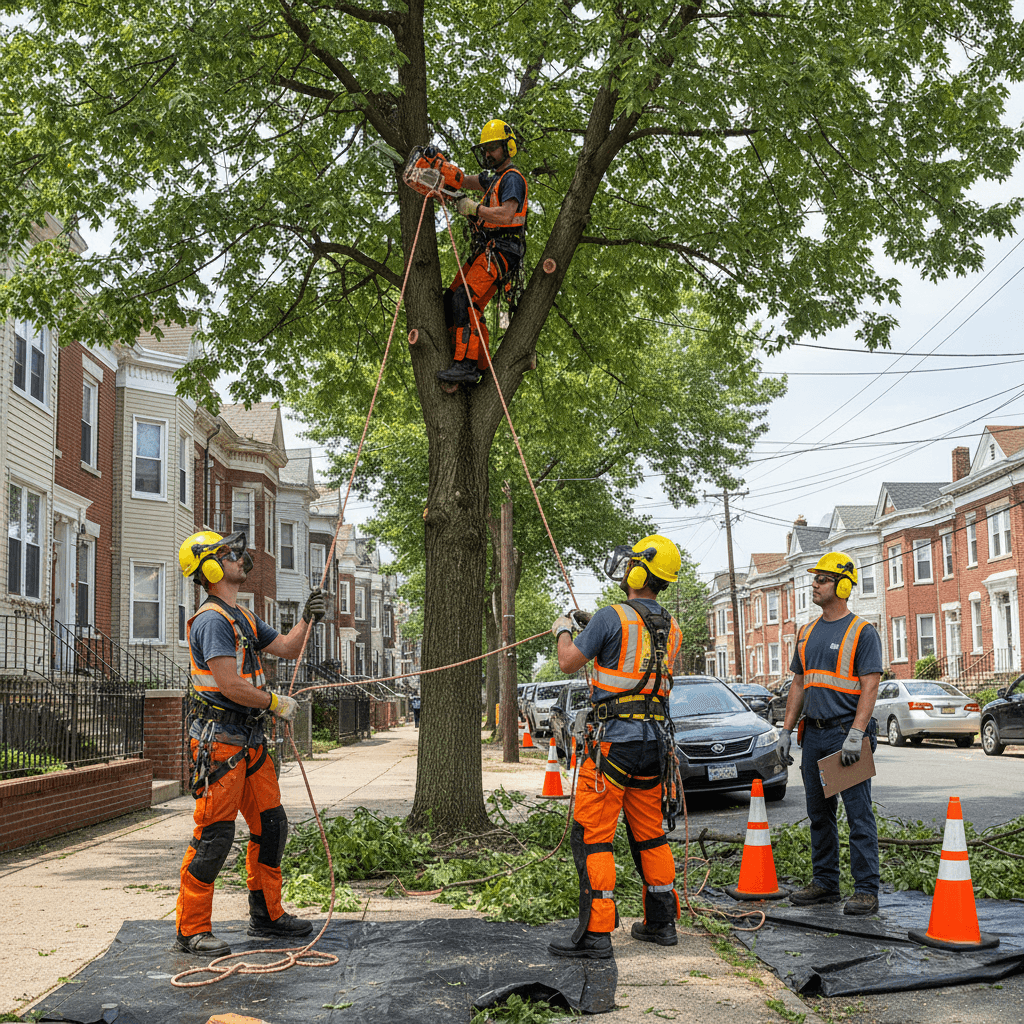
For all tree services that perform elevated tree work, all workers must utilize some form of fall protection system (such as harnesses, lanyards, and climbing lines). Fall protection systems must be designed according to certain performance requirements and must be regularly inspected. Many serious injuries are caused by improper use or damage to fall protection systems each year.
When climbing trees, arborists must always keep at least three points of contact with the tree. Safety harnesses must be attached to an anchoring point that can support the required load. Arborist safety training includes teaching workers about the proper use and maintenance of fall protection systems.
If a homeowner observes tree service workers performing work without utilizing a fall protection system, the homeowner should immediately stop the workers from continuing the work. Not using a fall protection system is a violation of basic safety principles and greatly increases a homeowner’s liability.
No reputable professional tree service would ever send out its workers without proper fall protection systems.
Personal Protective Equipment (PPE) Standards
OSHA has developed extensive guidelines for personal protective equipment that must be used by all tree services. Hard hats, eye protection, hearing protection, chainsaw-resistant pants, and safety boots are all examples of PPE that must be worn by all workers. Each piece of PPE must meet industry-wide standards and must be properly maintained. Using complete PPE protects workers from many types of hazards simultaneously.
Hard hats protect workers from falling branches and debris that are constantly being dropped from above on ground workers. Eye protection protects workers from injury from flying wood chips and sawdust. Chainsaw-resistant pants have special fibers that “jam” chainsaw blades when they come into contact with them, thus preventing potentially fatal leg injuries.
All equipment must be kept in good working order, and all damaged or worn PPE must be replaced promptly. Worn-out or damaged PPE does little to protect workers; it provides a false sense of security for workers while putting them at great risk. Homeowners should always observe if all crew members are wearing full, complete PPE and that it is properly maintained.
Adherence to ANSI Z133
The American National Standards Institute (ANSI) Z133 standard is a voluntary consensus standard that contains comprehensive safety requirements specifically for arboriculture. OSHA frequently uses the ANSI Z133 standard when assessing complaints related to the safety of tree work.
The ANSI Z133 standard requires all employers to develop a written plan that addresses how to identify and evaluate the risks associated with each job prior to starting work. Employers must also assess and evaluate the various hazards associated with the job. For example, employers must consider factors such as overhead utilities, adjacent structures, unstable trees, and environmental factors (i.e., high winds, lightning).
Developing a written plan to identify and evaluate the risks associated with each job is an essential element of providing a safe environment for all workers and customers. By developing a written plan, employers take a systematic approach to identifying potential hazards and mitigating those hazards prior to beginning work.
Employers must then communicate this information to all workers before commencing work. Workers must be informed of the hazards present on the job site and what role(s) they will play in controlling or eliminating those hazards. Communication protocols and emergency procedures must also be communicated to workers.
By communicating this information to all workers, employers can help prevent accidents from occurring due to a lack of communication or confusion regarding the hazards present on the job site.
Homeowners may request to see the written job hazard analysis that the employer developed to identify and evaluate the hazards associated with the work to be performed.
Employers must document the written job hazard analysis to provide evidence of their efforts to provide a safe workplace. Documentation of the written job hazard analysis can be used as evidence of the employer’s professional diligence and accountability.
Many properties located in areas surrounding Union City, NJ, particularly properties with difficult access or utility issues, can benefit from employers conducting thorough job hazard analyses.
Equipment Operating and Maintenance Standards
The ANSI Z133 standard also establishes specific requirements for equipment operation, inspection, and maintenance. Daily inspections and proper maintenance of chainsaws are mandatory. Wood chippers must have specific safety features, including feed control bars and emergency shut-off devices. Bucket trucks must be subjected to regular mechanical inspections.
Maintenance of equipment ensures that it operates safely and efficiently. It also reduces the likelihood of accidents. Professional tree services adhere to the manufacturer’s recommended maintenance schedules and document all service work.
This organized approach not only prolongs the life of the equipment but also assures its reliability and safe operation.
Electrical Hazard Safety Protocols
Electrical hazards pose one of the greatest risks faced by tree workers. Electrical contact with power lines results in numerous fatalities each year. A comprehensive electrical safety protocol protects workers and property from this significant threat.
Minimum Approach Distances
Specific minimum approach distance rules govern the separation of workers and equipment from energized conductors. Untrained workers must maintain a minimum of 10 ft. clearance from power lines carrying 50 kV or less. Greater voltages require proportionate distances.
Qualified workers who have completed a line-clearing course can work closer to power lines after they determine the exact voltages involved and implement the necessary safety precautions. Even qualified workers maintain a specific clearance distance depending on the voltage level. These safety margins eliminate the risk of accidental contact or electrical arc.
Homeowners should never allow workers to approach power lines without proper qualifications and equipment. This is a very serious safety issue and warrants an immediate stop to the work. Utility infrastructure in neighborhoods such as West Hoboken creates electrical hazards throughout Union City.
Utility Company Coordination
In cases where there are electrical issues that require a utility company to temporarily de-energize a power line or install protective devices, professional tree services must arrange this in advance. Proper coordination with the utility company eliminates the electrical hazard for the duration of the work phase.
Some homeowners bypass the utility company coordination process to save time or money. This is a hazardous shortcut that places workers at risk of electrocution and could also result in utility interruptions. Legitimate professionals place a higher priority on electrical safety than on expediency or cost savings.
Equipment Safety Features and Requirements
In addition to personal protective equipment (PPE), tree work safety also involves equipment designed for tree work. Each piece of equipment must include specific safety features, and the operator must be trained in the proper use of the equipment.
Chainsaw Safety Standards
Newer chainsaws include several important safety features, including chain brakes, throttle locks, and reduced vibration. At all times, operators must maintain two-hand control of the saw. Sharpening and adjusting the chain on a chainsaw on a regular basis ensures safe and efficient operation.
Arborists who are experienced and knowledgeable recognize the danger of kickback and teach proper cutting techniques to minimize risk. Arborists never operate chainsaws overhead or in a position that compromises their ability to maintain control. If homeowners witness unsafe chainsaw practices by an arborist, they should immediately question the arborist’s qualifications.
Chipper Machine Safety
Wood chippers are considered one of the most hazardous pieces of equipment in tree work. Modern chippers have built-in safety features, such as feed control bars, emergency shut-offs, and protective covers. Arborists must receive training on the safe method of feeding materials into the chipper and emergency shutdown procedures.
There are many documented safety violations involving workers who are injured while attempting to reach into the feed mechanism of a chipper. Professional tree services have established strict procedures for feeding materials into chippers and do not permit workers to reach into chippers. Due to the dangers of chippers, homeowners residing in residential areas in Union City, New Jersey, can benefit from hiring professional tree services that emphasize chipper safety.
Ground Safety and Work Zone Protection
Maintaining the area on the ground where tree work is being conducted helps protect workers, homeowners, and pedestrians from injuries caused by falling objects or debris. Effective work zone management identifies the risk of falling objects and maintains safe distances.
Drop Zone Identification
A drop zone defines the area on the ground where branches and wood sections will fall during the tree removal process. All personnel, except for the designated workers removing branches and wood, must remain outside of the drop zone until the removal process is completed. The size of the drop zone must account for the height of the tree, the length and width of the branches, and the distance the branches may bounce or roll.
Professional tree services use traffic cones, yellow caution tape, or physical barriers to clearly mark the drop zone to prevent unintentional entry into the drop zone. Properties in Union City, particularly those near the Transfer Station with high pedestrian traffic, must employ extreme vigilance in maintaining safe drop zones.
Public and Property Protection
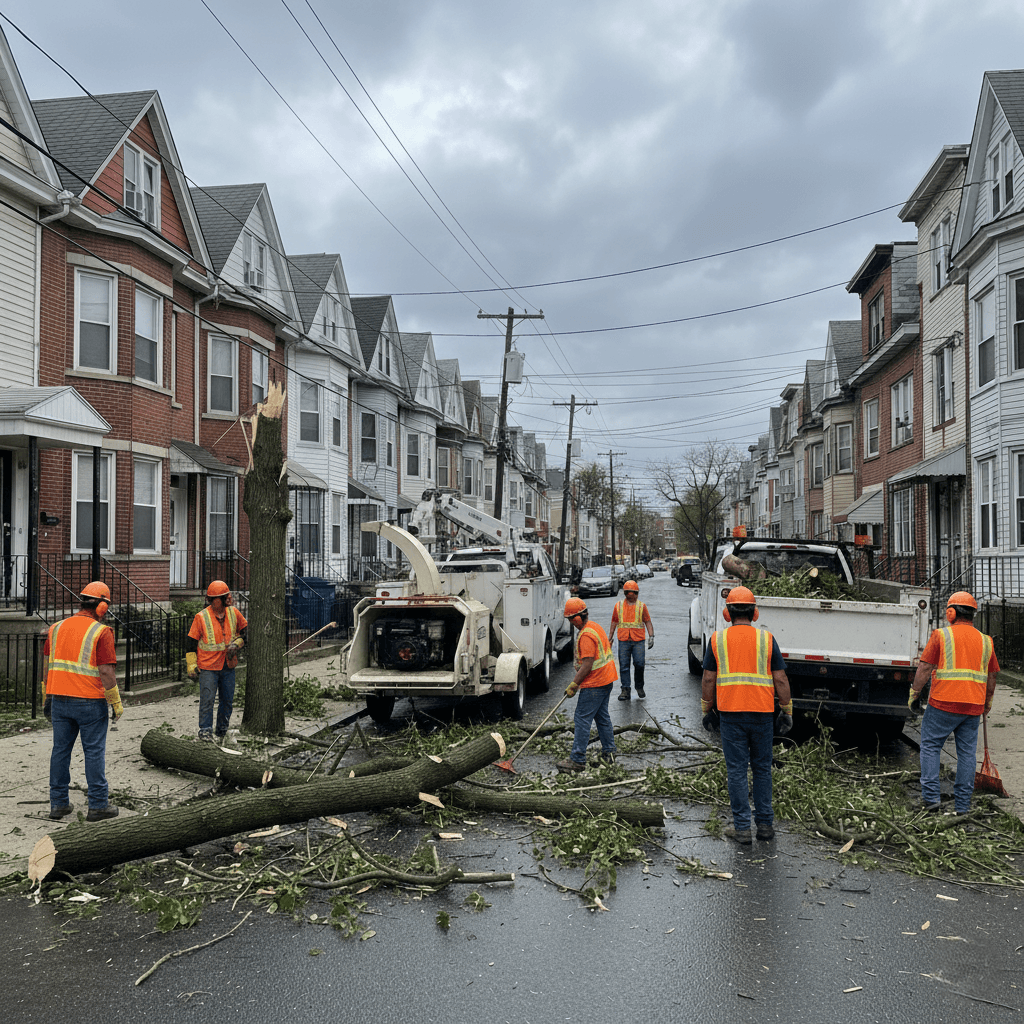
Due to the density of housing in Union City, protecting the public during tree work operations is extremely important. Professional tree services protect the public by closing sidewalks, blocking traffic, notifying neighbors, and coordinating with property owners to limit the impact of the tree removal work while minimizing the risk to people in the vicinity.
Protective barriers enclose nearby buildings, vehicles, and landscaping features from falling debris. Ground tarps are placed under the chipping area to catch the wood chips and facilitate clean-up. Professional tree services demonstrate their commitment to comprehensive safety and property protection by employing these methods.
Emergency Response Preparation
Although all possible precautions are taken, emergencies still occur during tree removal operations. Professional tree services prepare for emergency situations by establishing emergency response plans and having emergency response equipment available to respond quickly and effectively to emergencies.
Emergency First Aid and Medical Response
All work sites must have accessible first aid kits and trained personnel to provide emergency first aid to injured workers. Critical tree removal injuries require prompt medical treatment. Professional tree services are aware of the local emergency services contact numbers and access routes for ambulances.
Specialized first aid training in tree removal focuses on treating injuries from chainsaw accidents, falls, and electrical contact. Providing specialized first aid training improves the outcome ofemergenciess. Companies that demonstrate preparation for emergencies demonstrate a total commitment to safety.
Equipment Failure Protocols
Malfunctioning equipment creates hazardous situations that demand immediate action. Professional tree services train their crews to anticipate and respond to equipment failure scenarios, including stuck branches, rigging failures, and mechanical failures. Well-coordinated emergency response protocols are in place to handle emergency situations.
Limits on Working in Weather Conditions
Professional tree services develop and enforce weather-related work suspension policies to protect workers, regardless of client pressure to complete the project.
Wind Speed Cuts Off Elevated Work
Elevated tree work is significantly increased in danger by high winds that alter the trajectory of falling branches and decrease the stability of climbers. Professional tree services cease elevated work when wind speeds exceed safe limits. By doing so, they prevent accidents and meet their obligations to their workers.
Rain, Precipitation, and Visibility
Rain makes climbing surfaces slippery and can compromise equipment operation and climber safety. Lightning poses an immediate threat to workers and requires an immediate cessation of work. Poor visibility caused by fog or darkness prohibits workers from making accurate assessments of the hazards present and from operating safely.
Verifying Contractor Safety Compliance
While homeowners should rely on their instincts and observations to ensure that their tree service provider is operating safely, they should also actively verify contractor compliance.
Verification Steps to Protect Homeowners
- Verify Current Coverage and Sufficient Limits Through the Contractor’s Insurance Carrier: Do not accept the contractor’s copy of their certificate of insurance. Call the insurance carrier and confirm that the policy is current and that the limits are sufficient to cover potential liabilities.
- Review Contractor Certifications Through Issuing Organizations: Verify the contractor’s certification status and the date the certification was issued through the issuing organization. Online verification systems exist for many certification programs, including those offered by the International Society of Arboriculture (ISA).
- Observe the Contractor’s Use of Personal Protective Equipment (PPE): Observe all crew members to ensure that they are using complete, well-maintained PPE. Evidence of missing or damaged PPE indicates a reckless disregard for safety and may indicate that the contractor is trying to cut corners to save money.
- Identify Red Flag Warning Signs of an Unreliable Contractor: Evidence of the following four warning signs indicates a potentially unreliable contractor:
- The contractor is either unwilling or unable to provide proof of current insurance coverage and/or sufficient limits of liability. Contractors who are willing to lower their price for a cash payment without providing insurance documentation are placing the homeowner at risk of enormous liability.
- The contractor lacks valid professional certifications or claims to have extensive experience without providing documentation of the same. Professional competency requires both experience and formal education.
- The contractor is not equipped with the proper PPE and/or is using damaged equipment. Lack of proper PPE or the use of damaged equipment demonstrates a fundamental failure to maintain safety standards. Cutting corners in safety translates to cutting corners in all aspects of their business.
- The contractor offers to perform a low-cost service to attract customers but fails to provide the necessary safety documentation and equipment. The benefits of hiring a competent and safety-conscious contractor far outweigh the added expense.
The Benefits of Paying More for Reliable Services
Reliable contractors cost more because of the additional expenses associated with complying with safety standards. These added expenses are the reason why professional contractors cost more than unlicensed operators. However, paying more for a reliable contractor is financially prudent because it protects you from liability in the event of a serious accident.
Neighborhoods such as Monastery Place, in Union City, NJ, benefit from professional safety standards that protect all parties involved in the tree work.
Conclusion
At Union City Tree Experts, safety standards are the foundation of everything we do. We provide comprehensive insurance coverage, certified arborists, comply with OSHA, and maintain the highest standards for safety in all of our operations. When you hire us to perform tree work services, you receive the peace of mind that comes from knowing that you are working with professionals who have never compromised on safety. From the pre-job hazard assessment to the last piece of equipment left on-site, all of our operations reflect our commitment to the highest safety standards.
LATEST POSTS